Understanding Lore Nekromantea Hollow: A Practical Guide to Dawnland's Distinctive Font
Typography can make or break a project. When you come across a typeface like Lore Nekromantea Hollow by Dawnland, it is easy to feel both intrigued and uncertain. The name alone carries a dark, storytelling quality that suggests depth and character. But what exactly is this font, and what should you know before using it? Whether you are designing a poster, branding a small business, or working on a creative side project, understanding this typeface fully will save you time, frustration, and potentially costly mistakes.
What Is Lore Nekromantea Hollow?
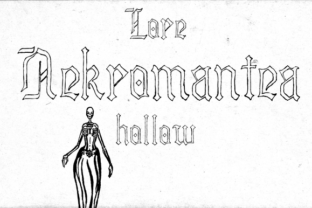
Lore Nekromantea Hollow is a decorative display font created by the designer known as Dawnland. It belongs to a broader family of typefaces that draw inspiration from gothic, dark fantasy, and occult visual traditions. The hollow variant, as the name suggests, features letterforms with empty or negative-space interiors, giving each character a skeletal, carved, or etched appearance. This is not a font designed for subtlety. It makes a statement.
People are drawn to Lore Nekromantea Hollow for its atmosphere. It evokes ancient manuscripts, spellbooks, dungeon-crawl aesthetics, and ritualistic design. If you are working on a project that needs a heavy dose of mood, mystery, or medieval weight, this typeface can deliver that instantly.
However, its visual strength is also its greatest limitation. Many users, especially those new to decorative typography, misunderstand how and where this kind of font works best. The mistakes usually start before the first character is even typed.
Common Mistake: Treating a Display Font Like a Workhorse
One of the most frequent errors people make with Lore Nekromantea Hollow is using it for long passages of text. Because the hollow style relies on open spaces within each letter, readability suffers dramatically at smaller sizes or in dense paragraphs. A headline or a short phrase may look stunning. A full paragraph of body copy, on the other hand, can become a confusing tangle of empty shapes and thin strokes.
This mistake affects usability and communication. If your audience cannot read the text quickly, they will disengage. That is not a failure of the font. It is a failure of application.
Better approach: Reserve Lore Nekromantea Hollow for short, high-impact uses. Titles, chapter headings, logo wordmarks, event posters, and single-word focal points are ideal. For supporting text, choose a clean, highly readable font that contrasts with the ornate nature of the hollow style. A simple sans-serif like Open Sans or a sturdy serif like Source Serif Pro will give your design breathing room while letting the decorative font shine.
Overlooking Licensing and Commercial Use
Another overlooked detail involves licensing. Many decorative fonts, including those in the Nekromantea family by Dawnland, are distributed with specific usage terms. You may assume a free download grants full commercial rights, but that is not always the case. Some fonts are free for personal use only, meaning you cannot legally use them in a product, a logo for a paying client, or a marketing campaign without purchasing a commercial license.
This misunderstanding can lead to costly consequences, especially for freelancers and small business owners. If you design a logo with an unlicensed font and the client later receives a takedown notice, both your reputation and your wallet take a hit.
Better approach: Before downloading Lore Nekromantea Hollow, check the license agreement carefully. Visit the original source—Dawnland’s official page or a reputable font marketplace—and read the terms. If a commercial license is required, factor that cost into your project budget from the beginning. It is a small investment that protects your work and your client relationships.
Ignoring the Hollow Effect in Different Contexts
The hollow design is not just a stylistic choice. It changes how the font interacts with backgrounds, colors, and other design elements. Because each letter contains empty space, the background behind the text becomes part of the visual composition. If you place Lore Nekromantea Hollow over a busy photograph or a cluttered pattern, the hollow areas may fill with distracting details, ruining the legibility and the aesthetic.
Similarly, using a light-colored version of the font on a white background can cause the hollow spaces to disappear entirely. This is a common oversight that results in flat, unreadable text.
Better approach: Always test Lore Nekromantea Hollow against multiple background options. Dark or solid backgrounds tend to work best because they create clear contrast both around and inside the letters. A deep charcoal, burgundy, navy, or black background will allow the hollow shapes to read clearly. If you must place it over an image, consider adding a semi-transparent overlay behind the text to maintain contrast without losing the background entirely.
Practical Example: Poster Design
Imagine you are designing a poster for a local folk horror film screening. You set the title in Lore Nekromantea Hollow over a misty forest photo. The result is muddy — the trees and fog show through the hollow parts of the letters, making the title hard to read. Instead, you add a dark gradient overlay behind the text area. The title now appears carved into the darkness, and the contrast brings out every curve and void in the letterforms. The design feels intentional and professional.
Neglecting Font Pairing and Hierarchy
Another mistake is using Lore Nekromantea Hollow alone across all levels of a design. Without a supporting font, your project may look one-note or overwhelming. The font’s dramatic personality needs a counterbalance to create visual hierarchy and guide the reader’s eye.
This error affects the overall quality and professionalism of your work. A poster or webpage that uses only one highly decorative typeface often feels chaotic, as though no design system was in place.
Better approach: Pair Lore Nekromantea Hollow with a simple, neutral font. For example, use the hollow typeface for the main headline, a lighter or standard-weight version of the same font family (if available) for subheadings, and a plain sans-serif for any body text or supplementary information. This creates a clear hierarchy without competing styles.
A Simple Pairing Strategy
- Headline: Lore Nekromantea Hollow
- Subheadline: A clean serif like Lora or a standard gothic font
- Body text: A readable sans-serif like Inter or Roboto
This combination gives you mood and impact where it matters most, and clarity where readers need to absorb information quickly.
Downloading from Unreliable Sources
Decorative fonts are especially vulnerable to piracy and malware. Because users search for terms like Lore Nekromantea Hollow free download, they often end up on third-party sites that offer files without the designer’s permission. These downloads may contain corrupted files, outdated versions, or even hidden malware. Even if the file works, you may miss important licensing information or additional font weights that are part of the full family.
This mistake affects both security and convenience. A corrupted font file can crash your design software, and a malware infection can compromise your entire system.
Better approach: Always download Lore Nekromantea Hollow directly from Dawnland’s official distribution platform, such as their personal site, a trusted marketplace like MyFonts or Creative Market, or a reputable open-source repository. These sources ensure you get the correct file, the right license, and updates if available. Paying for a font is not just about legality. It supports the designer and ensures you receive a high-quality product.
Not Testing Readability at Actual Use Size
Many designers preview fonts at large sizes in the font menu. Lore Nekromantea Hollow looks dramatic at 72 points. But what happens at 18 points, or 14 points? The hollow strokes may become so thin that the letters lose their shape entirely. This is a critical detail for entrepreneurs and marketers who may want to use the font on business cards, social media graphics, or small print materials.
If you design a flyer and the font becomes unreadable when printed at actual size, you waste time, materials, and money. Even digital uses can suffer if the font shrinks on mobile screens.
Better approach: Before finalizing any design, test Lore Nekromantea Hollow at the exact size and medium you intend to use. Print a sample at full scale for physical projects. Preview it on a mobile device for digital use. If the font becomes illegible, consider increasing the size, adjusting the weight (if a bolder variant is available), or choosing a different font for that specific application.
Final Thoughts on Using Lore Nekromantea Hollow Effectively
Lore Nekromantea Hollow from Dawnland is a remarkable typeface with genuine visual power. Its hollow, carved aesthetic can elevate designs that need atmosphere, history, or a touch of the arcane. But like any specialized tool, it requires understanding to use well.
Avoid the common pitfalls: using it for long text, neglecting licensing, ignoring background interaction, skipping font pairing, downloading from unsafe sources, and failing to test at final size. When you respect the font’s strengths and limitations, you create work that looks intentional, communicates clearly, and stands out for the right reasons.
Whether you are a hobbyist exploring dark fantasy aesthetics or a professional building a brand identity, take the time to learn the font before you commit to it. Your audience will notice the difference, and your projects will be stronger because of it.