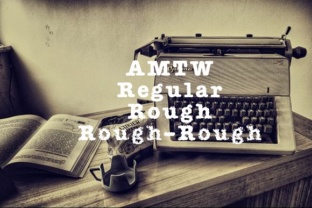
AMTW: Bringing the Character of Vintage American Typewriters into Modern Workflows
The tactile memory of a well-worn typewriter key striking paper is difficult to replicate digitally, yet the visual character of that era remains compelling for many professionals. AMTW, a font series built on the letterforms of old American typewriters, offers this texture and presence across three distinct versions: AMTW Regular, AMTW Rough, and AMTW Rough Rough. For designers, writers, small business owners, educators, and anyone who works with text daily, understanding what each variant does and where it fits in a production process matters more than simply downloading a file. This article examines how AMTW can move from being a decorative choice to a deliberate part of your workflow, whether you are planning a brand identity, editing a newsletter, preparing learning materials, or documenting a personal project.
What AMTW Is and Where It Belongs in a Production Process
AMTW is not a single font but a family of three interpretations of the same source material: the mechanical imperfections of vintage American typewriters. AMTW Regular captures the baseline impression of a clean ribbon strike on good bond paper. AMTW Rough introduces subtle wear, inconsistent ink deposits, and the kind of textural variation that happens after hundreds of pages of use. AMTW Rough Rough pushes further, simulating a ribbon that is nearly exhausted, paper that has absorbed too much moisture, and keys that strike with uneven force. Each version serves a different phase in a project, and selecting the right one depends on what you want the text to communicate before your audience reads a single word.
In a practical workflow, AMTW Regular functions as the workhorse version for body copy where reading clarity must remain high but the overall visual tone should still feel analog. AMTW Rough works well for headlines, pull quotes, or short sections where you want to imply age or use without sacrificing legibility. AMTW Rough Rough is best reserved for design elements that benefit from heavy texture: title slides, poster text, packaging accents, or short passages read at a deliberate pace. Understanding this hierarchy helps you avoid the common mistake of over-texturing body copy, which slows reading speed and reduces comprehension.
Before: Planning and Asset Selection
When you are in the planning phase, AMTW can help you set a visual anchor for tone and direction. Instead of starting a mood board with generic serif or sans-serif fonts, load AMTW Regular into your wireframe or layout template and see how the letterforms affect your sense of time and place. This is particularly useful for professionals who work on brand guidelines, editorial design, or course materials. The font’s mechanical irregularity forces you to consider spacing, line length, and hierarchy earlier in the process, because a typewriter font does not compress or stretch elegantly. You will catch layout problems before you invest hours polishing a design that only works with a neutral system font.
For educators and content creators, testing AMTW Rough on a headline during the outline stage can reveal whether your subject matter will benefit from a nostalgic or handcrafted tone. If the font feels dissonant, you have saved yourself the trouble of retrofitting a style onto content that would be better served by a cleaner typeface. This pre-production evaluation is a small step that improves consistency across a whole project.
During: Execution and Iteration
As you move into active production, the three AMTW variants become tools for differentiation within a single document. For example, in a newsletter for a small business, you might set the main article body in AMTW Regular, use AMTW Rough for subheads, and apply AMTW Rough Rough only to the masthead or a featured quote. This layered approach creates visual depth without requiring multiple font families. The reader registers the shift in texture as a change in importance or voice, which supports your information hierarchy.
For bloggers and freelance writers who produce long-form content, AMTW Regular is readable enough for full articles when set at a generous size with adequate line spacing. However, you should test the font on different screen resolutions and at various point sizes before publishing. Because typewriter fonts tend to have wider character widths and tighter spacing than modern digital fonts, you may need to adjust margins, increase body text size by one or two points, and allow more vertical space between lines. This adjustment is straightforward but essential for maintaining reading comfort over a 1000-word piece.
When collaborating with a designer or a developer, specify which AMTW version you are using in your style guide. A rough version used unintentionally in a code snippet or a print template can create unexpected results, especially when combined with effects like drop shadows or outlines. Consistency across team members and tools starts with naming the variant clearly in your project files.
After: Quality Control and Revision
After the main content is in place, AMTW can help you review tone and consistency during the quality control pass. Read through the document with attention to how the textural variation interacts with images, backgrounds, and other graphic elements. AMTW Rough Rough, for instance, can make a white background feel dirty or aged, which may be the intended effect for a vintage poster but could appear careless in a business report. Adjust the variant or the background treatment accordingly.
If you are archiving a project for future use, label your font usage alongside your style notes. AMTW is not a system font, so anyone revisiting the project later will need to know which version you used and where. Storing the font files in your project asset folder and noting the variant in a readme file prevents confusion during revision cycles months or years later.
Preparation and Compatibility Testing
Before committing to AMTW across a project, test the font in the applications you actually use. Some design tools handle OpenType features more gracefully than others, and some web platforms may not support variable or rough font rendering at all. Load all three variants into your primary application and set a short passage of your content at your target size. Look for legibility issues, kerning problems, and unexpected changes in weight. If you plan to use AMTW on the web, confirm that your hosting method supports the font file format you have, and prepare fallback fonts that preserve the layout if the file fails to load.
For print projects, request a proof or test print early. AMTW Rough Rough, in particular, can look dramatically different on coated versus uncoated paper because the simulated wear interacts with real paper texture. A small test run saves material and time and gives you a reliable sense of the final output.
Organizing Your Font Assets for Efficiency
Because AMTW exists in three versions, organization matters. Avoid mixing the variants in a single folder without clear naming. Create subfolders or label each file with the variant name at the beginning of the filename, for example, “AMTW-Regular.otf,” “AMTW-Rough.otf,” and “AMTW-RoughRough.otf.” In your design or writing tool, set up font lists or style presets that call the correct variant by name. This prevents the frustration of accidentally applying Rough Rough to a long article body and discovering the issue only at the final review stage.
If you share fonts with a team, ask everyone to install all three variants and agree on naming conventions in the project style guide. A short one-page reference with examples of each version at common sizes helps everyone make consistent decisions.
Maintaining Consistency Across Outputs
Consistency is not limited to font selection; it extends to how you use the variants across different outputs. A social media graphic, a printed flyer, and a web article should use the same AMTW variant for the same function. If the headline on the flyer uses AMTW Rough, the headline on the corresponding web banner should also use AMTW Rough, even if the medium forces different sizing or color treatment. This discipline builds a recognizable visual identity around the font choice, reinforcing the analog character that attracted you to AMTW in the first place.
For long-term projects, periodically revisit your font usage. Trends shift, and a font that felt appropriate at the start may feel forced later. AMTW’s three variants give you room to adjust the textural intensity without abandoning the typewriter aesthetic entirely. If a brand or publication evolves toward a cleaner voice, you can step down from AMTW Rough Rough to AMTW Regular, or phase out the font gradually across releases.
Useful Observations and Workflow Examples
Consider a small business owner creating a series of product labels. AMTW Regular works for ingredient lists or origin stories where legibility is paramount. AMTW Rough suits the product name or flavor description where a handmade feel adds appeal. AMTW Rough Rough can be reserved for the batch number or a short note on the back label, reinforcing the small-batch, artisanal positioning. The font family handles the entire voice without requiring a second typeface.
For a freelance writer preparing a digital zine or newsletter, AMTW Regular set at 14pt with 1.5 line spacing provides a reading experience that feels personal without being visually noisy. Subheads in AMTW Rough at 18pt break the page naturally. The writer does not need to design from scratch each week; a style template built around the three variants can be reused and adjusted, freeing time for content creation.
In a classroom or workshop setting, an educator might use AMTW Rough Rough on a single handout to simulate historical documents, then switch to AMTW Regular for the main reading packet. Students perceive the difference in texture as a cue about the material’s context, which supports learning objectives without requiring additional explanation.
Professionals managing multiple projects should weigh the legibility trade-offs. AMTW Regular is the most versatile of the three, but even it requires more horizontal space than standard digital body fonts. If your project has strict character counts per line—such as a brochure with fixed column widths—test the font with real content early. Adjusting column widths or font size after the layout is approved costs time and may introduce other design problems.
Making AMTW Work for the Long Term
Font integration is not a one-time decision. Over months of use, you will learn which AMTW version performs best for each content type, output medium, and audience. Document those observations as part of your workflow notes. If you notice that AMTW Rough Rough consistently requires background adjustment for readability on screen, note that for future projects. If AMTW Regular works well at 13pt in print but needs 15pt on the web, record that difference. These small records eliminate guesswork the next time you start a project and allow you to hand off knowledge to a colleague or client without repeating the same tests.
The three AMTW variants offer a rare thing in digital typography: a family that changes emotional register while remaining visually coherent. By treating them as distinct tools for distinct phases of a project, you get the texture and authenticity of vintage American typewriters without sacrificing the control that modern production demands. Whether you are roughing out a first draft, polishing a final layout, or revisiting an old project, AMTW gives you a range of expression that is both nostalgic and practical.