Praetoria: Where Ancient Roman Authority Meets Modern Display Design
A Font Built on the Pillars of History
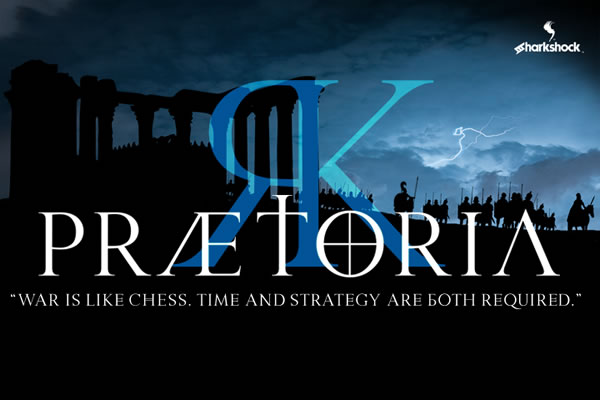
Praetoria is a serif titling font that draws its foundational strength from the Roman square capitals used in ancient Rome. This is not a casual nod to the past—it is a direct lineage. For designers, publishers, and content creators, a typeface like this offers more than aesthetics. It offers credibility. When you see a Praetoria headline, you sense the weight of empire, the clarity of a chiseled inscription, and the timelessness of a language that shaped the Western world. But what makes this font truly useful for today's projects is not just its historical accuracy—it is how those roots translate into practical, modern outcomes.
Why the Uppercase Letters Deserve Your Attention
Praetoria's uppercase letters are its strongest asset. They are modeled directly after Roman square capitals, which means they carry a geometric precision and a monumental presence. For movie posters, especially those in the historical, epic, or fantasy genres, using Praetoria in all caps immediately establishes a tone of gravitas. A book cover for a historical novel or a non-fiction title about leadership, strategy, or philosophy benefits from this same authority.
Consider a case where a small publisher is working on a series of classic literature reprints. Using Praetoria for the title on the spine and cover provides a visual link to the permanence of the text. It tells a potential reader: This book has stood the test of time. The font does the heavy lifting of creating trust without a single word of copy.
The Practical Danger of Using Lowercase Alone
One detail about Praetoria that any user should know immediately: you may use the uppercase letters exclusively, but it is highly discouraged to use the lowercase in the same way. The reason is structural. Some lowercase letters in Praetoria are fictitious variations of their uppercase counterparts. They were not historically present in Roman capitals. A few, such as the b and the m, were plucked from the Russian and Greek alphabets respectively. These letters are not mistakes—they are deliberate design choices that add texture and personality. But they also break the pure Roman silhouette when used in bulk.
If you set an entire sentence in lowercase Praetoria, the result can feel uneven. The borrowed glyphs stand out in a way that may confuse the reader's eye. The flow that we expect from a standard lowercase is not there. This is not a flaw; it is a feature of a display font. It simply means the lowercase should be used sparingly, as a compliment to uppercase.
Where the Lowercase Works Best
Use the lowercase letters for accents, pull quotes, or short phrases that need a touch of the unusual. For example, in a game title screen, you might have the main name in all caps—IMPERIUM—and then a subtitle like "of the b₁₂₃" where that borrowed Greek or Russian character adds a subtle foreign flavor. The result feels intentional, not accidental. It gives the work a layer of depth that rewards close looking.
For Game Developers and Independent Studios
Indie game developers often work with tight budgets and limited marketing assets. A font like Praetoria can solve a major design problem: how to make a title screen or in-game UI feel expensive without spending money on custom lettering. The uppercase alone is enough to create logos that look like they belong on a AAA title. For a strategy game set in a fictional empire, using Praetoria for faction names, map labels, and key menus builds instant world coherence.
One practical recommendation is to pair Praetoria uppercase with a clean, minimal sans-serif for body text. The contrast works well. The user reads the important names in the strong, serif style, but the instructions or lore text remain legible in a neutral font. This saves time on font pairing decisions and keeps the visual hierarchy clear.
For Book Cover Designers and Self-Publishers
Self-published authors in genres like historical fiction, epic fantasy, political thriller, or philosophy often struggle to create covers that look professional. Praetoria offers a shortcut to a classic look. A single word in all caps—PRAETORIA itself as a title, or a series name like CONSPIRACY—has a presence that can carry a cover even without a complex illustration.
Designers can layer the uppercase letters with textures, emboss effects, or metallic gold gradients to mimic foil stamping. The result looks like a premium hardcover, which increases perceived value for the reader. For a small business owner publishing a manual on leadership or team management, this type of cover design can elevate the product and justify a higher price point.
For Movie Poster and Video Thumbnail Creators
In today's crowded digital space, thumbnails and posters need to grab attention in under a second. A bold, uppercase title in Praetoria does exactly that. The font's squared proportions and even spacing make it highly readable even at small sizes. On a YouTube thumbnail, a single word like BATTLE or REIGN set in Praetoria can communicate the entire genre of a video.
One observation: the font works particularly well for titles that are short—one to three words. Longer phrases should be broken into stacked lines, with each line kept to a few words. This respects the titling nature of the font and avoids crowding.
Who Benefits Most from Using Praetoria
This font is not for everyone, and that is a strength. It is specifically suited for professionals and creators who work with visual hierarchy and branding in contexts that require authority, age, or formality.
-
Marketers and small business owners who want to position a product or service as premium or established. A consulting firm's slide deck with Praetoria headers can communicate decades of experience, even if the business is new.
-
Educators and bloggers who create course materials, guides, or digital products about history, philosophy, law, or management. Using Praetoria for chapter titles and key concepts gives the content a sense of scholarly weight.
-
Freelancers and hobbyists working on personal projects like world-building, tabletop role-playing game materials, or even wedding invitations with a classical theme. The font provides a professional finish without requiring advanced design skills.
Where to Exercise Caution
Praetoria is a display font, not a text font. It is not designed for body copy, long paragraphs, or web articles. Using it for extended reading will cause fatigue. The lowercase limitations mean that it should never be used for full sentences in a user interface or a book text block. Always reserve it for titles, headers, logos, and short accent phrases.
Also, if your brand or project leans toward a modern, clean, or minimal aesthetic, Praetoria may feel too heavy or traditional. In those cases, it is better to compare it with other titling fonts that offer a lighter touch. For example, if you are designing for a tech startup, a more neutral sans-serif would likely serve you better.
Practical Tips for Getting Started with Praetoria
If you decide to try Praetoria for your next project, here are a few actionable recommendations:
- Start with uppercase only. Build your title or logo from the capital letters. This gives you the purest expression of the Roman square capital influence and avoids the inconsistencies of the lowercase.
- Use lowercase as a spice, not a meal. Add a lowercase letter to a subtitle or a decorative detail only if you want a specific exotic note. Treat it as a deliberate design accent.
- Pair it wisely. Combine Praetoria with a simple, modern sans-serif like Helvetica, Open Sans, or Lato for body copy. This contrast highlights the font's historical character.
- Adjust tracking and spacing. Praetoria's uppercase letters are wide. Adding a small amount of letter-spacing can improve legibility and create a more regal, airy feel. Do not compress the letters.
- Test at different sizes. The font is designed for larger sizes, so scale it down carefully. At extremely small sizes, the serifs may blur, and the borrowed lowercase letters may become confusing.
The Real Value of Choosing a Font with Character
Selecting a font is one of the most consequential decisions a creator makes. It sets the emotional tone of a project before a single word is read. Praetoria offers something rare: a direct link to a visual language of power and permanence. When you choose it, you are not just picking a pretty set of letters—you are borrowing the authority of ancient Rome for your own work.
For the indie game developer trying to build a world worth exploring, for the self-published author whose book jacket must stand out in a store, for the small business owner who wants to signal stability and quality—Praetoria provides a tool that does not require an advanced degree in design to use well. Its uppercase letters are a reliable workhorse. Its lowercase letters, used sparingly, add a touch of the unexpected.
The key is to respect the font's nature. Treat it as a titling face. Use the uppercase confidently. Let the lowercase be the rare guest. And do not expect it to behave like a standard text font. With those boundaries in mind, Praetoria becomes a powerful addition to any creator's toolkit—one that saves time, strengthens presentation, and helps communicate a message of enduring value.