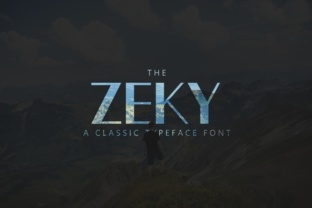
Zeky: A Classic Typeface for Every Design Project
If you have ever browsed through font libraries looking for something that feels both familiar and refined, you may have come across Zeky. At first glance, it looks like a typeface that has been around for decades, and in many ways, that is exactly the point. Zeky is a classic typeface font built around traditional character shapes, balanced proportions, and a clean visual presence. It does not try to be trendy or disruptive. Instead, it offers something more lasting: clarity, readability, and a quiet confidence that works across nearly any design context.
Whether you are designing a poster, building a website, preparing a presentation, or working on branding materials, Zeky gives you a solid foundation. It is not a font that demands attention for itself, but rather one that helps your message come through clearly. For anyone who has ever struggled with choosing a typeface that feels right for multiple projects, Zeky offers a reliable answer.
What Makes Zeky a Classic Typeface
When we call a typeface "classic," we usually mean it draws from traditional letterforms, avoids excessive decoration, and remains easy to read across sizes and media. Zeky fits that description naturally. Its characters have a timeless shape language that does not rely on passing design fads. The strokes are consistent, the spacing is thoughtful, and the overall appearance feels grounded.
Zeky comes with a classic character style, which means each letter carries a sense of history without feeling outdated. The curves, terminals, and serifs (if present in the style) are designed to be visually pleasing without being overly ornate. This makes Zeky especially useful for projects where you need the text to be taken seriously. Think of legal documents, educational materials, editorial layouts, or business correspondence. In these settings, a font that feels too playful or too modern can undermine trust. Zeky avoids that pitfall entirely.
Another aspect worth noting is the versatility baked into its design. Because Zeky does not lean heavily into any single aesthetic, it can adapt to a wide range of visual contexts. You can pair it with more decorative fonts for contrast, or use it alone for a clean, understated look. This flexibility is one of the main reasons designers keep coming back to it.
Why People Choose Zeky for Their Projects
The appeal of Zeky often comes down to a simple need: a font that just works. Beginners appreciate that it does not require deep typographic knowledge to use effectively. Professionals value it as a reliable workhorse that delivers consistent results across print and digital outputs. For casual users, Zeky removes the guesswork from font selection, which can be surprisingly stressful when you are not sure what will look good.
Beyond convenience, Zeky supports several common goals:
- Legibility: Whether someone reads your text on a phone screen or a printed brochure, Zeky keeps the words easy to follow.
- Professional appearance: A classic typeface signals attention to detail and respect for the reader.
- Time savings: Instead of testing ten different fonts, you can choose Zeky and move forward with confidence.
- Consistency across media: Zeky performs well in both small and large sizes, so you can use it for headings, body text, captions, and labels without changing fonts.
For small business owners and entrepreneurs especially, these benefits translate directly into better communication with customers. A menu, a website, an email newsletter, or a product label that uses Zeky tends to feel more organized and trustworthy. That impression matters in competitive markets where first impressions are everything.
Practical Ways to Use Zeky in Your Work and Life
Because Zeky can be used for every design project you have, the list of possible applications is long. Let us look at some realistic examples across different contexts.
Personal Projects and Creative Work
If you are creating a photo book, a wedding invitation, or a personal blog, Zeky gives your project a polished finish without looking too stiff. Its classic character style works well with both formal and casual themes. For instance, a travel journal or a family recipe book benefits from the readability and warmth that Zeky provides. You do not need to be a professional designer to get good results, which is encouraging for anyone exploring creative hobbies.
Professional and Business Materials
In a professional setting, Zeky can be your go-to typeface for reports, proposals, slide decks, and internal documents. It helps maintain a cohesive brand identity across different file types and formats. Marketers and bloggers often use Zeky for body text in articles or landing pages because it keeps readers engaged without causing eye strain. For entrepreneurs building a new brand, Zeky offers a neutral starting point that you can later pair with more distinctive display fonts as your visual identity evolves.
Educational and Instructional Content
Teachers, trainers, and course creators need typefaces that support learning. Zeky is a strong candidate here because its letterforms are clear and familiar. Worksheets, handouts, online course slides, and study guides all benefit from a font that does not distract. Students can focus on the content rather than struggling to read the text. This may sound like a small detail, but in educational contexts, every bit of clarity helps.
Digital and Commercial Use
For websites, apps, and digital products, Zeky holds up well on screens of all sizes. It renders cleanly in web browsers, and its classic proportions mean it remains readable even at smaller font sizes. Freelancers designing logos or social media graphics can rely on Zeky for body copy while using a bolder font for headlines. Small business owners selling physical products can use Zeky on packaging, labels, and price tags to create a cohesive look across their entire product line.
Important Considerations Before Choosing Zeky
While Zeky is remarkably versatile, no typeface is perfect for every single situation. Here are a few things to keep in mind as you decide whether it fits your project.
- Assess the tone you need. Zeky leans classic and neutral. If your project demands a very modern, edgy, or highly decorative look, you may want to pair it with another font or look for something more stylized.
- Check licensing terms. Like any typeface, Zeky may come with different licensing options depending on where you obtain it. Make sure you have the right license for your intended use, especially for commercial projects or web embedding.
- Consider the full character set. Depending on the version of Zeky you use, check whether it includes the glyphs, ligatures, or language support you need. This is especially relevant if your project requires special characters or non-Latin scripts.
- Test it in context. Before committing to Zeky for a large project, test it in the actual medium you plan to use. Print a sample, preview it on a website, or mock up a mobile view. Typography always reads a bit differently in context than in isolation.
- Pairing with other fonts. Zeky works well with many sans-serif and serif typefaces, but it is worth experimenting with a few combinations to find what feels right for your specific project. A good rule of thumb is to use Zeky for body text and a contrasting font for headings.
Another practical observation: if you are new to typography, start by using Zeky in just one or two weights before expanding. This helps you understand how the font behaves without overwhelming your layout. As you grow more comfortable, you can explore its full range of styles and applications.
Getting the Most Out of Zeky
Using Zeky well does not require technical expertise, but a few small adjustments can make a noticeable difference. Pay attention to line spacing and margins. Because Zeky has a classic character style, giving it enough breathing room on the page or screen enhances its readability even further. Similarly, be mindful of color contrast. Dark text on a light background is usually the safest choice, but Zeky also handles colored backgrounds nicely when the contrast is sufficient.
If you are designing for print, test Zeky at the actual print size you plan to use. Sometimes fonts that look great on screen can feel slightly different on paper. This is true for any typeface, not just Zeky, and a quick test print can save you from surprises later.
For digital projects, make sure to specify a fallback font in your CSS that complements Zeky. This ensures that even if the font does not load for some users, the text remains readable and stylistically close to what you intended. Common fallbacks include Georgia, Times New Roman, or other classic serif options.
Final Thoughts on Zeky as a Design Tool
Zeky is one of those typefaces that quietly does its job without demanding praise. It is not flashy, and it does not try to reinvent typography. Instead, it offers something perhaps more valuable: dependability. For anyone who needs a classic typeface that works across projects, media, and skill levels, Zeky is a choice worth making.
Whether you are a beginner putting together your first design, a freelancer juggling multiple client needs, or a small business owner trying to build a professional look on a budget, Zeky gives you one less thing to worry about. It helps your content speak clearly, and that is really the whole point of typography in the first place.
If you have not tried Zeky yet, consider giving it a place in your font library. You may find yourself reaching for it more often than you expect, simply because it makes your work look better with minimal effort. And in a world full of design decisions, having a reliable classic like Zeky in your toolkit is always a smart move.