Typrighter: The Typewriter Font That Feels Genuinely Alive
Most typewriter fonts look like they were designed by someone who has never actually touched a typewriter. They are too clean, too repetitive, too obviously digital. You get one letterform repeated over and over, and the result feels hollow, like a prop rather than the real thing. That is exactly the problem Typrighter solves, and it solves it beautifully.
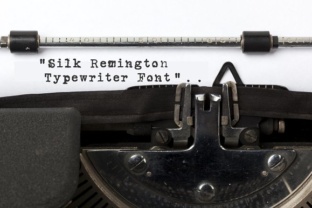
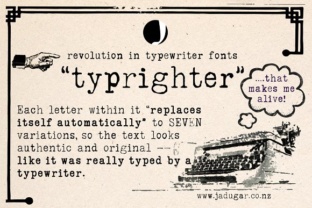
This premium font does something most typewriter-inspired typefaces simply cannot replicate: it behaves like a real machine. Each letter automatically shifts between up to seven distinct variations. You type an "e" once, and it might come out slightly lighter, a little worn, or sitting just a fraction of a millimeter higher than the next "e" you type. The result is a texture that feels organic, imperfect, and deeply authentic. It is the closest thing to putting actual paper in a vintage Olivetti or an old Underwood.
For anyone working in design, branding, publishing, or content creation, that level of authenticity matters far more than most people realize. Readers may not consciously notice the subtle variations in letterforms, but they absolutely feel the difference. A design that uses Typrighter carries an emotional weight that sterile digital fonts simply cannot deliver.
The Visual Character That Sets Typrighter Apart
Visually, Typrighter sits in an interesting space. It is unmistakably a serif font, but it carries the mechanical quirks of a monospaced typewriter face without feeling rigid. The strokes have a slight irregularity, the ink impression varies across letters, and the whole thing has a warmth that many modern typography choices lack entirely.
This is not a font that tries to be clean or perfect. It embraces the smudges, the uneven key strikes, and the slight misalignments that happen when metal type hits a ribbon and then paper. The personality here is honest, tactile, and nostalgic without feeling retro for the sake of being retro. It feels like something that has lived, been carried in a bag, typed on in a coffee shop or a library, and has a story to tell.
Because of those contextual substitutions, every single word you set looks slightly different depending on the surrounding letters. That makes Typrighter behave more like a handwritten font or a script font in terms of variety, but with the readability and structure of a classic serif. It is a rare combination that gives you the best of both worlds: mechanical rhythm and organic variation.
Where Typrighter Excels in Real Projects
If you are a designer or a brand strategist, you already know that the right typeface can make or break a visual identity. Typrighter is not a font you use for body text in a long report. It is a display font and a short-form workhorse that shines whenever you need voice, character, and a sense of physical presence.
- Logo design and brand identity. Small businesses, artisan brands, coffee shops, bookstores, and creative studios all benefit from a typeface that feels handcrafted. Typrighter gives a brand an immediate sense of history and care. When used in a logo or wordmark, it communicates that this is a person-led business, not a corporate shell.
- Editorial and packaging design. Magazine headers, pull quotes, product labels, and packaging inserts are natural homes for this font. The slight ink variation and letterform changes make printed pieces feel like they were stamped rather than mass-produced. For packaging, that tactile quality can elevate a product from ordinary to something someone wants to keep.
- Social media graphics and web design. In a sea of smooth sans serif fonts and generic handwritten fonts, a typewriter aesthetic stands out. Used sparingly on social media graphics, blog headers, or hero sections on a website, Typrighter adds a human layer. It cuts through the polish and makes your content feel more approachable.
- Print and personal projects. Zines, poetry collections, posters, wedding invitations, thank-you notes, and even resumes can benefit from that textured, honest look. Hobbyists and crafters will appreciate how the font turns a digital document into something that looks like it was produced with intention and care.
For publishers and content creators who work with short editorial pieces, essays, or newsletters, Typrighter works beautifully in subheads, introductions, or as a run-in style that breaks up long stretches of sans serif or modern serif body copy. It creates a visual punctuation point that readers naturally pause on.
How Typrighter Influences Readability, Brand Perception, and Engagement
Readability with a typewriter font always raises questions. Because the letters are monospaced and have mechanical irregularities, some designers worry about legibility. The truth is that Typrighter is surprisingly readable for short to medium-length passages. The serifs help anchor each letter, and the variation between characters actually makes words easier to recognize. Our brains are wired to read patterns, not individual letters, and the subtle shifts in weight and alignment mimic the way we naturally process imperfect handwriting or printed text.
For visual hierarchy, Typrighter works best as a contrast element. Pair it with a clean sans serif font for body text, and the typewriter sections immediately become focal points. The eye is drawn to that density and texture. It creates a natural rhythm on the page that guides readers through the content without needing heavy visual cues like oversized headings or loud colors.
From a brand perception standpoint, using a font like Typrighter signals that you care about detail and authenticity. It tells your audience that you are willing to step away from the default choices and invest in design assets that have a point of view. That matters enormously in a marketplace where so many brands look and feel interchangeable. Consistency in brand identity is not just about using the same colors and logo; it is about choosing typography that carries the same emotional tone across every touchpoint. Typrighter delivers that consistency with warmth.
Audience engagement also benefits. Content that feels personal and crafted invites longer attention. When someone lands on a blog post or sees a social media graphic set in a font that looks like it was typed just for them, they are more likely to pause, read, and remember. The subtle variations in the letterforms give the text a handcrafted quality that algorithms and templated design cannot replicate.
Practical Guidance for Choosing and Using Typrighter
Before you commit to a commercial font like Typrighter in a project, it is worth thinking through a few practical considerations. This is not a typeface you want to force into the wrong context just because it looks cool.
Evaluating Project Fit
Ask yourself what mood you are trying to create. Typrighter works best when the goal is warmth, nostalgia, honesty, or handmade quality. If your project needs to feel sleek, futuristic, or highly polished, this is probably not the right choice. But if you are designing for a brand that values tradition, craftsmanship, or personal connection, it is nearly perfect.
Consider the medium as well. Digital screens handle the subtle variations well, but you should always test the font at different sizes and on different devices. Some of the finer details may be lost at very small sizes, so keep Typrighter for headings, short paragraphs, or accent text rather than dense body copy.
Testing Font Pairings
Typrighter pairs exceptionally well with clean modern typography. Try combining it with a minimal sans serif font for contrast. The rough texture of the typewriter face against a smooth, neutral sans creates a visually interesting tension that feels curated rather than chaotic. A simple serif font with a light weight can also work, especially if you want a more literary or editorial feel.
Avoid pairing Typrighter with another highly decorative or heavily textured typeface. The result will be visually noisy and hard to read. Let Typrighter be the personality piece in your layout and keep everything else restrained.
Reviewing Included Styles and Commercial Licensing
When you invest in a premium font, you want to know exactly what you are getting. Check whether the version you purchase includes all the contextual substitution features. Some font distribution platforms strip out OpenType features, so confirm that the file supports the automatic letter variations that make Typrighter special. You want the full set of up to seven variations per letter, not a simplified version.
Commercial licensing is straightforward with most quality foundries, but always read the terms. If you are a small business owner or freelancer, look for a license that covers web use, print, and social media graphics. Some foundries offer extended licenses for logo use or embedding in digital products. For most design projects, a standard desktop license will cover your needs, but if you plan to use Typrighter in a logo for a client or as part of a product you sell, make sure your license allows it.
Readability Considerations in Practice
Test Typrighter at the actual sizes you will use. In a large display setting, the variations add beautiful texture. At 14 or 16 pixels on a screen, some of that nuance may blur, especially on lower-resolution displays. For web design, consider using a slightly larger size than you normally would for display text, and give it enough letter spacing so the monospaced feel does not crowd the words together.
In print, Typrighter performs reliably well at medium sizes. The serifs and ink variations hold up nicely on uncoated paper, which enhances the vintage feel even further. If you are printing on glossy stock, the effect is still good but loses a bit of that tactile illusion.
Ultimately, Typrighter is a font that rewards attention. It asks you to slow down, consider your layout, and think about what your design is trying to say. For designers, entrepreneurs, marketers, publishers, and creators who care about the difference between good typography and great typography, it is a tool that delivers real, noticeable value. It makes your work look human, and in a world saturated with generic digital content, that is a rare and valuable thing.