Sarah Loewe: Where Brush Pen Energy Meets Playful Contrast in Script Typography
Typography has a way of shaping how we feel about what we read. A single typeface can whisper elegance, shout boldness, or dance along the page with carefree charm. Among the many script fonts available today, Sarah Loewe stands out for its distinctive personality. It is not just another brush script—it is a deliberate blend of thin and fat glyphs, manually drawn with a brush pen, and finished with a generous set of swashes that make every word feel handcrafted. Whether you are a designer searching for something fresh or a business owner wanting your branding to feel more human, this typeface has something worth your attention.
In this article, we will walk through what makes Sarah Loewe unique, where it shines, and how to decide if it fits your next project. No fluff—just practical insights informed by real use and typographic thinking.
The Craft Behind Sarah Loewe: A Brush Pen Creation
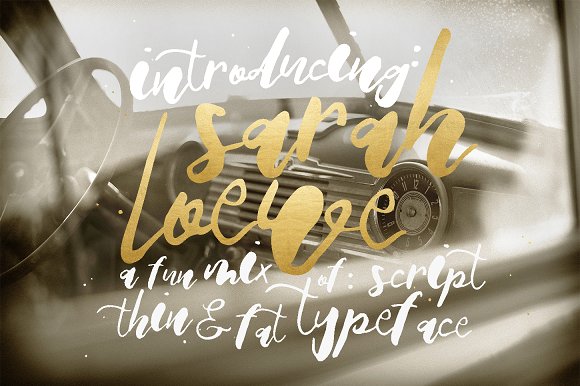
Sarah Loewe was not built on a computer from the start. It began with a manual process—a brush pen in hand, strokes drawn with intention, pressure varying naturally from light to heavy. That is where the signature mix of thin and fat glyphs comes from. Every letter carries the organic rhythm of someone writing by hand, not the uniform precision of a vector-only script.
When you look at the letterforms, you notice the contrast immediately. Some strokes are delicate and narrow, while others swell with weight. This is not a mistake or a glitch—it is the defining feature of the typeface. The variation gives the text a lively, almost conversational feel. It feels like someone wrote it just for you, not like a font that was mass-produced in a sterile environment.
The brush pen origins also mean that the edges have a slight softness, a texture that digital-only scripts often lack. This makes Sarah Loewe particularly effective when you want your typography to feel approachable, warm, and human.
What the Swashes Add to the Story
One of the most compelling features of Sarah Loewe is the set of unique swashes that come with it. Swashes are the extra flourishes you can attach to letters—think sweeping tails, graceful loops, and decorative accents that extend beyond the basic letterform. In this typeface, the swashes are not an afterthought. They are integrated into the design so that they feel natural, not forced.
You can use swashes to give a single word extra personality—perhaps a logo, a headline, or a wedding invitation title. Because the swashes match the thin-and-fat rhythm of the base glyphs, they do not clash with the main letterforms. Instead, they amplify the playful, handcrafted energy that makes Sarah Loewe memorable.
For designers, this means less time manually drawing flourishes and more time experimenting with OpenType features to find the perfect arrangement. For non-designers, it means you can achieve a polished, custom look without hiring a lettering artist every time you need a header.
Key Characteristics of Sarah Loewe at a Glance
- Thin and fat contrast: Each letter alternates between delicate and bold strokes, creating a sense of movement and rhythm.
- Brush pen authenticity: The imperfections of manual drawing are preserved, giving the font a natural, unpolished charm.
- Fun playful tone: The overall impression is lighthearted and friendly, not stiff or formal.
- Rich swash set: Multiple ornamental alternatives allow for customization and flair.
- Script style: It flows like connected handwriting, which makes it ideal for short expressive text.
These characteristics together make Sarah Loewe a script font that is both versatile and distinctive. It does not try to be everything to everyone—it knows what it is, and it leans into that identity.
Where Sarah Loewe Works Best
Because of its playful and expressive nature, Sarah Loewe is not suited for every context. You would not use it for a dense legal document or a financial report. But for projects that benefit from personality and a human touch, it is an excellent choice. Below are some of the most effective use cases.
Branding and Logo Design
Small businesses, creative studios, and lifestyle brands often struggle to find a typeface that feels both professional and personal. Sarah Loewe fits that gap well. Its contrast and swashes give logos a custom feel without requiring a full custom lettering project. A cafe, a boutique, a stationery brand, or a wellness coach could all use this font to signal warmth and creativity.
Invitations and Event Stationery
Weddings, birthday parties, baby showers, and other celebrations rely on typography to set the mood. Sarah Loewe’s brush pen texture and playful flair make it a strong candidate for invitations, save-the-dates, and thank-you cards. The swashes add a decorative element that can reduce the need for additional graphic ornamentation.
Social Media Graphics and Quotes
On platforms like Instagram and Pinterest, text often carries as much weight as images. Sarah Loewe works well for short quotes, captions, and highlight headers. Its natural flow draws the eye and makes the words feel more like art than plain text. When paired with a clean sans serif for body copy, it creates a balanced and modern look.
Product Packaging and Labels
Handcrafted products, artisanal goods, and small-batch items benefit from packaging that looks handmade. Sarah Loewe can be used on labels, tags, and boxes to reinforce the idea of something made with care. The thin-and-fat strokes add visual interest even at small sizes, as long as the text remains short.
Web Headlines and Hero Text
While Sarah Loewe is not designed for long paragraphs, it can shine in hero sections and large headlines on websites. The contrast becomes more visible at larger sizes, and the swashes can serve as decorative anchor points. It works especially well on creative portfolios, boutique e-commerce sites, and personal brand pages.
Who Benefits Most from Using Sarah Loewe
Different audiences will find value in this typeface for different reasons. Here is a breakdown of who might benefit and why.
- Graphic designers and lettering artists will appreciate the authentic brush pen feel and the time saved by having swashes built into the font. It is a strong addition to any script font collection for client projects.
- Small business owners and entrepreneurs can use Sarah Loewe to create cohesive branding without hiring a professional letterer. It gives a polished yet personal look to logos, social posts, and packaging.
- Event planners and wedding professionals will find it useful for invitations, signage, and decor materials that need to feel celebratory and handcrafted.
- Content creators and influencers can leverage the font to make their visual content more distinctive, especially in a crowded social media landscape where standing out matters.
- Non-designers who want to add typographic flair to projects like invites, posters, or personal blogs will appreciate that the font is easy to use and produces professional-looking results with minimal effort.
Strengths That Make Sarah Loewe Stand Out
One of the biggest strengths of Sarah Loewe is its authenticity. In a world where so much digital design looks polished but impersonal, a font that feels truly hand-drawn is a valuable tool. The thin and fat contrast is not just decorative—it mimics the natural pressure changes of writing, which creates a more organic reading experience.
Another strength is the versatility of the swashes. Because they are built into the font and accessible through OpenType features, you can apply them selectively. This means you can use the same typeface for a simple clean look or a highly decorative one, depending on the context. That flexibility saves time and keeps your design system consistent.
Additionally, the playful tone of Sarah Loewe makes it approachable. It does not intimidate the reader—it invites them in. For brands or projects that rely on emotional connection, that quality is hard to overstate.
Considerations and Limitations to Keep in Mind
No typeface is perfect for every job, and Sarah Loewe has its limitations. Being transparent about these will help you make a better decision.
Readability at small sizes can be a concern. Because of the high contrast between thin and thick strokes, some lighter strokes may become hard to read when the font is used at very small sizes. This is common with many brush scripts, so it is wise to test it at the size you plan to use before committing.
Lengthy text blocks are not where this font shines. It is designed for short, expressive applications. If you try to set a long paragraph in Sarah Loewe, the continuous script style combined with contrast variation can become fatiguing to read. Pair it with a clean sans serif or serif for body text.
Limited formal tone means it will not suit corporate, legal, or highly formal contexts. If you need something authoritative or restrained, this is not the right choice. Its personality is best described as fun, friendly, and creative.
Finally, like all script fonts with OpenType features, compatibility and implementation may vary across software. Make sure your design tool supports OpenType swashes and alternates to get the full value from Sarah Loewe.
Practical Guidance: How to Evaluate Sarah Loewe for Your Project
Before you download or purchase a font, it helps to know what to look for. Here are a few questions to guide your evaluation.
- What is the context? Is this for a logo, a headline, a poster, or a set of social media graphics? Sarah Loewe works best for short, expressive text.
- What size will it be displayed at? At larger sizes, the contrast and swashes are assets. At very small sizes, readability may drop. Mock up a sample at your target size.
- Who is the audience? If the tone should be playful, warm, or creative, this font is a strong candidate. If it needs to be formal or neutral, look elsewhere.
- Do you want to use swashes? If decorative flourishes are part of your vision, make sure your software can access OpenType alternates. Most modern design tools can, but it is worth verifying.
- Does it pair well with other fonts? Try combining Sarah Loewe with a simple sans serif like Open Sans, Lato, or Montserrat for contrast. That pairing often yields a balanced and professional look.
Real-World Scenarios: Seeing Sarah Loewe in Action
Let us look at a couple of practical examples to make this more concrete.
Scenario 1: A boutique tea brand. The owner wants a logo that feels artisanal and warm. Using Sarah Loewe for the brand name, with a subtle swash on the first letter, gives the packaging a handcrafted look without a custom lettering investment. On the back of the box, ingredients are set in a clean sans serif, while the tagline uses Sarah Loewe again at a smaller size. The contrast between the two fonts keeps the design interesting but not chaotic.
Scenario 2: A wedding invitation suite. The couple wants something modern but romantic. Sarah Loewe is used for the couple’s names and the phrase “Join us in celebration.” The swashes replace the need for decorative borders or floral graphics. Venue details and schedule are set in a simple serif for readability. The result is elegant, personal, and cohesive.
Scenario 3: A creative coach’s Instagram feed. Quote graphics become more engaging when the headline uses Sarah Loewe and the body text uses a minimal sans. The playful energy of the font aligns with the coach’s brand voice, making the content feel more authentic and less corporate.
Final Thoughts on Sarah Loewe
Sarah Loewe is a typeface that understands its purpose. It does not try to be neutral or invisible. It wants to be seen, felt, and remembered. For projects that benefit from a human touch, a playful rhythm, and the organic energy of a brush pen, it delivers those qualities in abundance. The thin and fat glyphs give it movement, the swashes give it flair, and the manual creation process gives it soul.
Whether you are a designer expanding your toolkit, a business owner shaping your brand identity, or a creative looking for a font that feels less like a utility and more like a collaborator, Sarah Loewe is worth exploring. Try it on a headline, a logo, or an invitation. See how the contrast and flourishes change the way the words feel. That hands-on experience will tell you more than any description ever could.