Itaki and the Strategic Value of a Textured Brush Stroke Font
Choosing a typeface is rarely a neutral decision. Every font carries weight, shapes first impressions, and signals intent before a single word is read. For professionals, creators, and decision-makers who depend on clear communication, the right font can either reinforce a message or undermine it. Itaki, a brush stroke font built around an authentically textured, hand-crafted feel, offers something distinct in a landscape crowded with sleek, uniform typefaces. Understanding when and why to use it matters far more than simply liking how it looks.
This article explores the practical role Itaki can play in branding, communication, creative work, and long-term positioning. It is not about decorative flourishes. It is about making intentional decisions that serve real goals.
What Itaki Brings to Your Visual Strategy
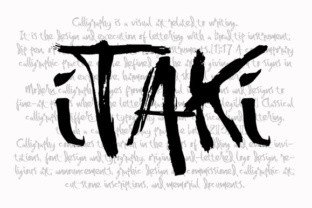
At its core, Itaki is a brush stroke font that mimics the natural variation of ink on paper. Each character carries subtle irregularities—varying pressure, slight shakes, uneven edges—that no algorithmically perfect typeface can replicate. This texture gives Itaki an authentic, human quality that straight lines and uniform curves cannot touch.
For someone planning a brand identity, a campaign, or even a personal project, this authenticity is a strategic asset. It signals that the work behind the message was made by people, not machines. In an era of mass production and templated design, that distinction matters. Itaki helps you communicate warmth, craftsmanship, and a deliberate departure from the expected.
This is not a font for body copy or dense text blocks. Its strength lies in headlines, logos, short phrases, and moments where you need to stop a reader and make them feel something. Used thoughtfully, it becomes a tool for emphasis and emotional tone, not a substitute for readability.
The Practical Difference Between Texture and Polish
Many fonts are polished to the point of invisibility. That is ideal for long-form reading. But when your goal is to create a memorable impression—on a landing page, a product label, a social graphic, or a presentation title—invisibility works against you. You want texture. You want imperfection that feels intentional.
Itaki provides exactly that. The brush strokes feel human, and that humanness communicates confidence. It says, "We did this on purpose. We are not trying to blend in." For entrepreneurs and small business owners especially, this can be a low-cost way to differentiate without a full rebrand or expensive custom illustration.
Strategic Positioning: When Itaki Supports Your Goals
Using Itaki effectively begins with understanding where it fits in your broader planning. A font is not a strategy, but it can support one. Consider these scenarios where Itaki might serve your long-term objectives:
- Brand voice reinforcement: If your brand values include authenticity, handcrafted quality, or individuality, Itaki visually echoes that message. A wellness brand, artisan coffee company, or independent publication could use it to reinforce their positioning without extra explanation.
- Campaign differentiation: In competitive markets, standing out in a feed or on a shelf requires more than good copy. A textured headline in Itaki can break visual patterns and earn an extra moment of attention.
- Event or seasonal materials: Limited-time campaigns or special events benefit from typography that feels temporary and unique. Itaki suggests something was created for that moment, not pulled from a template.
- Personal projects and portfolios: Freelancers and creators can use Itaki to add character to personal branding, portfolio headers, or project titles. It signals a thoughtful, hands-on approach to craft.
Each of these uses requires clear intent. The font is not a shortcut to credibility, but it can amplify a message that already has direction.
Aligning Font Choice with Audience Expectations
Before choosing Itaki, consider who you are speaking to. A brush stroke font resonates differently depending on context. For a creative agency or a design-forward audience, it signals confidence and taste. For a corporate client or a conservative industry, the same font may feel out of place or unprofessional.
This is not a reason to avoid Itaki. It is a reason to plan around it. If your audience values tradition and precision, use Itaki sparingly—perhaps only in internal materials or campaign-specific assets rather than permanent brand elements. If your audience craves originality and human connection, lead with it.
Strategic font selection is about fit, not preference. Itaki fits best where texture and authenticity are assets, not liabilities.
Practical Approaches to Using Itaki in Your Work
Once you understand the strategic role Itaki can play, the next step is implementation. Thoughtful use requires restraint, context, and pairing. Here is how to approach it:
Pairing Itaki with Complementary Fonts
Because Itaki carries strong visual weight, it works best when balanced by neutral, highly readable typefaces. A clean sans-serif or a simple serif for body text allows Itaki to stand out without overwhelming the page. The contrast itself becomes part of the design language—rough against smooth, organic against structured.
When planning a layout, let Itaki lead the hierarchy. Reserve it for the most important line: the headline, the call-to-action, the name. Everything else should support that decision, not compete with it.
Choosing Contexts That Benefit from Texture
Some formats are naturally better suited to a brush stroke font than others. Consider these high-impact contexts:
- Product packaging where the font becomes part of the tactile experience
- Social media graphics where stopping the scroll is the primary objective
- Presentation titles where you want to signal a shift in tone or topic
- Physical signage or print materials where texture reads as quality
- Video thumbnails and cover images where legibility at small sizes still matters
In each case, test the font at the actual size it will be viewed. Brush stroke fonts can lose definition when scaled too small, or they can become overpowering when scaled too large without proper spacing. Planning reduces the risk of a poor outcome.
Risks of Using Itaki Without Clear Goals
No font is immune to misuse, and Itaki is no exception. The most common mistake is treating it as a default choice rather than a deliberate one. When designers or business owners pick Itaki simply because they like the look, without considering context, audience, or hierarchy, the result often feels disconnected.
Specific risks include:
- Reduced legibility in long text: Itaki is not designed for paragraphs. Using it for body copy frustrates readers and undermines comprehension.
- Overuse across too many elements: When every headline, subhead, and label uses the same brush stroke font, the texture loses its impact. It ceases to be special and starts to feel chaotic.
- Mismatch with brand values: A polished, corporate brand suddenly using a rough brush font can confuse audiences who expect consistency. The font must align with the story you are telling.
- Accessibility concerns: Brush stroke fonts can be harder to read for people with visual processing differences or dyslexia. If your audience includes a broad demographic, consider accessibility early in the planning process.
These risks are manageable. They become problems only when decisions are made without planning. The solution is simple: define the goal first, then choose the tool. Itaki is a tool. It works exceptionally well when the goal requires texture, authenticity, and contrast.
Long-Term Value: Building Consistency Around Intentional Font Choices
For entrepreneurs, marketers, and creators who think beyond the immediate project, font choices are part of a larger system. Consistency across touchpoints builds recognition and trust. If Itaki becomes part of your visual language, use it consistently in the specific roles you assign to it.
Document those choices. Create simple guidelines: "Itaki is used for primary headlines on campaign assets only. It is not used for body text, subheadlines, or internal documents." This discipline ensures the font remains an asset rather than a source of visual noise.
Over time, the right font choices compound. Audiences begin to associate the texture of your headlines with the quality of your work. That association is not built overnight, but it is built intentionally. Every font decision either reinforces or erodes that trust.
Measuring the Impact of Typography on Outcomes
Can a font directly improve conversion rates, engagement, or brand recall? Only in context. A well-chosen font supports clarity, emotional resonance, and differentiation—all of which influence outcomes. But no font works alone.
If you test a campaign that uses Itaki in headlines, compare it against a version with a neutral sans-serif. Look at time on page, click-through rates, or social shares. The numbers will tell you whether the texture is helping or hindering. That kind of testing is how you move from guesswork to strategy.
For long-term brand building, look at qualitative feedback. Do clients or customers mention the visual identity? Do they describe the brand as "handcrafted," "authentic," or "unique"? If those terms match your goals, and they are being reinforced by your typography, you have found alignment.
Final Considerations Before Using Itaki
Itaki offers a textured, human feel that is increasingly rare in digital-first design. It can help you stand out, signal craftsmanship, and create emotional resonance in short-form applications. But like any strategic tool, its value depends entirely on how and why you use it.
Before committing to Itaki in a project, ask yourself:
- What specific goal does this font choice serve?
- Does my audience value the texture and authenticity it represents?
- Have I planned for hierarchy, pairing, and accessibility?
- Will this choice hold up across the touchpoints where it will appear?
If the answers reinforce intentional use, Itaki can become a reliable element in your visual toolkit. If the answers are unclear, step back and define the purpose before choosing any font at all.
Typography is a strategic discipline. The best choices are made with goals in mind, not trends. Itaki is not for everyone, and it is not for every project. But for those who need to communicate texture, humanity, and deliberate craft, it is a powerful option worth considering carefully.