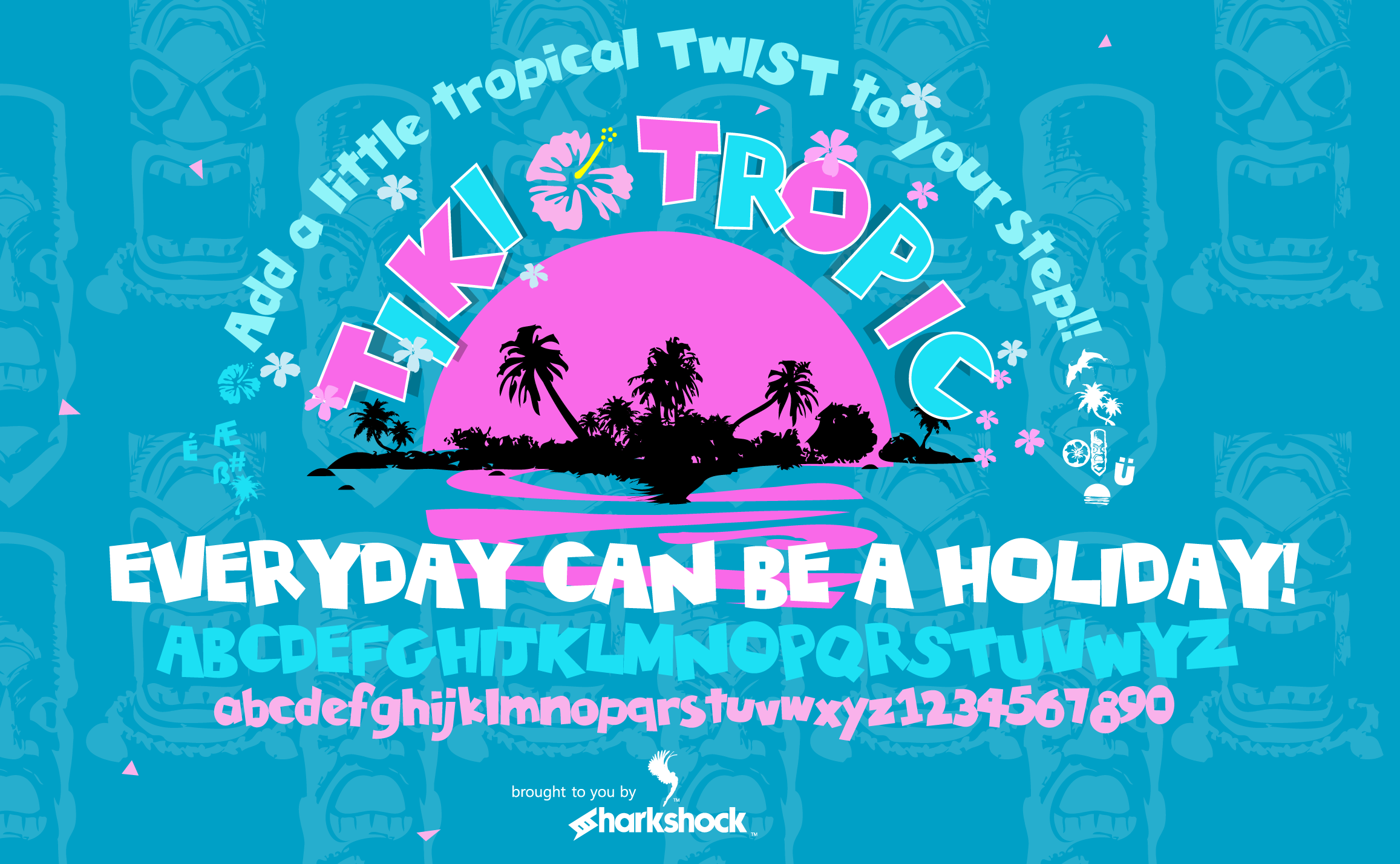
Tiki Tropic: A Display Font Built for Island-Inspired Design
For designers and content creators working on travel, hospitality, or lifestyle projects, the right typeface can set an entire mood. When the brief calls for warmth, leisure, and a tropical atmosphere, standard serif or sans-serif fonts often feel too clinical. This is where a specialized display font like Tiki Tropic enters the picture. Designed to evoke the spirit of sun-soaked destinations, Tiki Tropic is an irregular display font that brings a handcrafted, playful energy to text. But is it the right choice for your project, and how does it compare with other decorative typeface options? Understanding what Tiki Tropic offers, where it shines, and where it may fall short can help you make a more informed decision.
What Makes Tiki Tropic Distinct
Tiki Tropic is not a subtle font. It embraces an irregular, hand-drawn aesthetic that immediately signals fun, relaxation, and a break from the ordinary. Its letterforms are deliberately uneven, with organic curves and varied stroke widths that mimic the look of carved wood, painted signs, or handwritten chalkboards at a beachside cafe. This irregularity is a core feature, not a flaw, and it gives the typeface a lively, spontaneous feel that polished fonts cannot replicate.
What truly sets Tiki Tropic apart from many display fonts is its built-in library of graphical elements. The font includes vector illustrations of jumping dolphins, palm trees, Tiki masks, and other island motifs. These graphics are mapped to specific keyboard characters, allowing you to insert them directly into a text document without opening a separate illustration program. For quick mockups, social media graphics, or flyers, this feature saves considerable time. Additionally, the font supports basic Latin characters, numbers, punctuation, and European accents, making it usable for multilingual projects. Kerning is also included, which improves spacing consistency across letter pairs.
Another practical advantage is the ability to convert Tiki Tropic text to vector outlines in Adobe Illustrator. Once outlined, the type becomes fully editable paths, giving you complete control over individual anchor points and curves. This is useful when you need to customize a letterform, adjust a graphic, or prepare files for screen printing or laser engraving.
How Tiki Tropic Compares with Other Display Fonts
When evaluating Tiki Tropic, it helps to consider the broader landscape of display typefaces. Display fonts are designed for headlines, logos, and short text blocks, where personality matters more than readability at small sizes. Within this category, several approaches exist.
Hand-Drawn and Script Fonts
Many display fonts aim for a hand-drawn look, but most are refined to maintain consistent letter heights and even curves. Tiki Tropic embraces more irregularity than the average hand-drawn font, which gives it a rougher, more authentic feel. If you compare it with a polished script font, Tiki Tropic will feel looser and less predictable. That can be an advantage for projects that want to feel spontaneous, but it may feel too chaotic for brands that need a cleaner handmade appearance.
Graphic-Rich Fonts
Some decorative fonts include a few icons or flourishes, but few offer the density of graphics that Tiki Tropic provides. The dolphins, palm trees, and Tiki masks are not simply dingbats appended to a standard font; they are integrated into the character set in a way that feels cohesive. This integration allows you to mix text and illustrations seamlessly. Other graphic-rich fonts may require you to switch between a typeface and a separate icon font, which adds steps to your workflow. Tiki Tropic reduces that friction by combining both in one file.
Thematic Display Fonts
Many display fonts are designed around a specific theme: vintage, horror, futuristic, or rustic. Tiki Tropic belongs squarely in the tropical leisure category. Compared with generic "summer" fonts that use thin lines and bright colors, Tiki Tropic has a heavier, more grounded presence. It feels like it belongs on a wooden sign outside a surf shop or on a menu for a tiki bar. Other thematic fonts may give you a similar vibe but without the built-in graphics, which means you would need to source or create illustrations separately.
Strengths of Tiki Tropic
The primary strength of Tiki Tropic is its ability to establish a mood almost instantly. If you need to convey tropical escapism, this font does the heavy lifting for you. The irregular letterforms feel approachable and informal, making them well suited for small businesses, event promotions, and travel content that wants to feel friendly rather than corporate.
The built-in graphics are another clear advantage. For designers working under tight deadlines, being able to type a dolphin or palm tree directly into a layout can save hours. You do not need to browse stock image libraries, cut out backgrounds, or worry about licensing for separate illustrations. The graphics are already part of the font package, which simplifies both design and file management.
Vector outline conversion is also worth noting. Many fonts restrict editing, but Tiki Tropic's compatibility with Illustrator's outline function gives you flexibility. Once converted, you can tweak a dolphin's tail, adjust a Tiki mask's expression, or merge letters into a custom wordmark. This is especially valuable for logo design, where unique shapes are essential.
Tradeoffs and Limitations
No single typeface solves every design problem, and Tiki Tropic has limitations worth considering. The irregularity that gives it charm also reduces readability at smaller sizes. Body text set in Tiki Tropic will likely be difficult to read, especially on screens. This font is best reserved for headlines, short phrases, and decorative accents. For longer passages, you will want a complementary, more readable font for the body copy.
The tropical theme is another limiting factor. Tiki Tropic is heavily associated with Hawaii, Polynesian aesthetics, and beach culture. If your project targets a different mood, such as a modern urban brand or a minimalist Scandinavian design, this font will feel out of place. The graphics, while charming, can also feel repetitive if overused. A layout that includes multiple dolphins and Tiki masks may quickly become cluttered or gimmicky.
Additionally, the font's irregular spacing and varied stroke widths can create challenges when aligning text in a grid or pairing it with other typefaces. You may need to manually adjust kerning in certain letter combinations, even though basic kerning is included. For designers accustomed to highly refined typefaces, this extra effort can be a drawback.
When Tiki Tropic Is the Right Choice
Tiki Tropic works best in projects where fun and informality are the primary goals. Consider using it for:
- Event flyers for luaus, beach parties, or tropical-themed weddings
- Menu design for tiki bars, Hawaiian restaurants, or juice bars
- Social media graphics for travel influencers, surf schools, or resort promotions
- Short headline text in blog posts or email newsletters about tropical destinations
- Decorative elements in print materials such as postcards, stickers, or posters
- Logo concepts for small businesses with a beach or island identity
If your audience expects a lighthearted, sun-soaked experience, Tiki Tropic can deliver that without requiring additional illustration work. The integrated graphics make it particularly appealing for projects with limited budgets or tight turnaround times.
When You May Need Another Option
There are situations where Tiki Tropic may not be the best fit. If your project demands professionalism, luxury, or minimalism, this font will feel too casual. A corporate travel agency, a high-end resort, or a travel magazine aiming for a sophisticated tone would likely benefit from a cleaner display font or a refined script instead.
Projects that require heavy body text or long descriptions should avoid Tiki Tropic for paragraphs. Pairing it with a simple sans-serif like Open Sans or Lato can work for headlines, but the font itself should not carry the reading load.
If your brand identity needs to work across multiple media, including small mobile screens, the irregular details of Tiki Tropic may become lost or distorted at low resolutions. In digital contexts where clarity at small sizes is critical, a more straightforward display font may perform better.
Practical Considerations for Decision-Making
Before committing to Tiki Tropic, ask yourself a few questions. First, what is the primary medium? If you are designing for print on large surfaces, such as posters or banners, the irregular details will read well. For web use, test the font at various sizes to ensure legibility is acceptable for your specific text lengths.
Second, how much text will you set in this font? For short headlines, Tiki Tropic is effective. For longer passages, plan to use a secondary font. The contrast between a playful display font and a neutral body font can create a strong visual hierarchy, but it requires deliberate pairing.
Third, consider your audience. Tiki Tropic leans heavily into a specific cultural aesthetic. If your audience identifies strongly with island culture, surf lifestyle, or retro tiki imagery, the font will resonate. If your audience is broader or more formal, the font may seem like a novelty rather than a design asset.
Finally, evaluate the graphics. The dolphins, palm trees, and Tiki masks are fun, but they may not fit every brand. If you need a tropical font without the visual clichés, you might prefer a display font that suggests warmth through letterforms alone, without the built-in illustrations.
Making an Informed Choice
Tiki Tropic occupies a specific niche in the display font landscape. It is not a versatile workhorse; it is a specialty tool that does one thing well. For designers and content creators who need to inject a tropical feeling quickly, with minimal effort, it offers a combination of irregular hand-drawn type and integrated graphics that few other fonts provide. The ability to convert to vector outlines adds a layer of flexibility that is especially useful for custom logo work and print production.
Compared with other display options, Tiki Tropic stands out for its density of features within a single file. You get the typeface, the graphics, and the editing potential all in one package. However, that package comes with constraints around theme, readability, and application. By understanding both the strengths and the tradeoffs, you can decide whether Tiki Tropic aligns with your project's goals, audience expectations, and practical requirements. For the right project, it can be a quick and effective way to bring a bit of island sunshine to your design.