Understanding San Francisco: A Handmade Sweet Market Font for Creative Design
When you are exploring typeface options for a project, the sheer number of choices can feel overwhelming. You want a font that communicates a specific mood without shouting for attention. One option that often surfaces in discussions about decorative and handcrafted styles is the San Francisco font. Despite its name, this is not the system font used by Apple. Instead, it is a distinct handmade sweet market font designed to evoke warmth, nostalgia, and a personal touch. If you have been comparing display fonts for invitations, branding, or greeting cards, understanding what San Francisco offers and where it fits best can help you decide if it aligns with your creative goals.
This article provides a practical, comparison-aware look at the San Francisco font. We will examine its unique characteristics, how it stacks up against similar type styles, the strengths and tradeoffs you should consider, and the specific situations where it may be the right choice—or where you might need a different tool entirely. The goal is to give you the insights you need to evaluate this font for your own work, without hype or hard selling.
What Makes San Francisco Distinct?
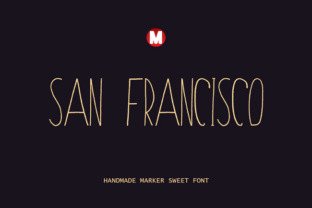
At its core, San Francisco is a handmade sweet market font. This description tells you a lot about its personality and intended application. "Handmade" means it does not rely on mechanical consistency. Instead, each character carries slight irregularities in stroke weight, slant, and spacing, mimicking the look of hand-lettering or brush pen calligraphy. This gives the font a human, approachable feel that is often missing from more uniform digital typefaces.
The "sweet market" aspect refers to its association with artisanal, small-batch, or vintage market aesthetics. Think of chalkboard signs at a farmer’s market, labels on handmade jams, or the lettering on a craft fair banner. San Francisco typically features rounded, friendly letterforms with gentle curves and a slightly playful tilt. It often includes decorative swashes or alternate characters that allow for customization, making each word look a bit more organic.
- Hand-lettered quality: Irregularities add character and warmth.
- Sweet market personality: Evokes nostalgia, artisan craft, and friendliness.
- Versatile extras: Often comes with ligatures, swashes, and stylistic alternates for natural flow.
- Common applications: Greeting cards, wedding invitations, branding for bakeries and boutiques, quotes, posters, and social media graphics.
This combination makes San Francisco a popular choice for projects where you want the text to feel personal and crafted, rather than mass-produced. It works well when you need to convey care, quality, and a handmade ethos.
San Francisco Compared to Other Font Styles
To understand where San Francisco fits, it helps to compare it with other common types of display fonts you might be considering. No single font works for every project, and each style brings different strengths and limitations.
San Francisco vs. Standard Script Fonts
Standard script fonts, such as formal wedding scripts or casual connected scripts, often have more fluid connections between letters. They can be elegant but sometimes feel too polished or predictable. San Francisco stands apart because it usually does not form tight, connected cursive. Instead, it appears more like hand-printed letters with a slant, giving it a looser, more casual rhythm. For a project where you want a relaxed, approachable tone—like a handmade soap label—San Francisco may feel more fitting than a formal script. However, for very formal events, a traditional script might convey the level of sophistication you need.
San Francisco vs. Sans-Serif and Serif Body Fonts
Clean, minimal sans-serif fonts (like Helvetica or Futura) or classic serif fonts (like Garamond) are workhorses for body text and professional materials. They prioritize readability at small sizes and maintain neutral tones. San Francisco is the opposite: it is a display font designed to be noticed. It has a strong personality that can overwhelm body text. If you pair it with a neutral sans-serif for body copy, the contrast can work effectively—the font adds character to headings while the sans-serif provides legibility. But using San Francisco for long paragraphs of text would likely tire the reader and reduce comprehension. This is a key tradeoff: its charm comes at the cost of scalability and reading ease.
San Francisco vs. Other Handmade or Market Fonts
Within the category of handmade sweet market fonts, there are many variations. Some are deliberately rough, with ink splatters and distressed edges, while others are cleaner and more refined. San Francisco typically sits in the middle ground—it is handmade but still polished. Compared to a rougher, grunge-style font, San Francisco may work better for modern, friendly branding. Compared to a very refined brush font, it may feel more down-to-earth and less pretentious. The choice often comes down to the exact vibe you want to project: rustic versus charming, bold versus gentle.
To summarize, here is a quick comparison of how San Francisco differs from other common font categories:
- Character set: Often includes multilingual support and multiple weight options (e.g., regular, bold, light).
- Legibility at small sizes: Moderate; better for display sizes above 18pt.
- Mood range: Warm, nostalgic, friendly, accessible; less formal or edgy.
- Customization: High, due to stylistic alternates and swashes that change the look of words.
- Best for: Headings, short phrases, logos, and decorative text.
Best-Fit Situations for San Francisco
Knowing when to use San Francisco helps you leverage its strengths. Based on its handmade, sweet market character, here are scenarios where it often excels:
- Invitations and greeting cards: For weddings, baby showers, birthdays, or holiday cards, the font adds a personal, handcrafted feel that digital templates sometimes lack. It communicates that the invitation was created with care.
- Branding for artisanal businesses: Bakeries, coffee shops, craft breweries, flower shops, and boutique clothing brands often use this style to project authenticity and a local, small-batch identity.
- Quotes and social media graphics: Inspirational or whimsical quotes set in San Francisco look approachable and shareable on platforms like Instagram or Pinterest. The organic lettering catches the eye without feeling aggressive.
- Product packaging and labels: Homemade jam, candles, skincare products, or gift tags benefit from a font that says "made with love." San Francisco fits this narrative well.
- Posters and signage for events: Market days, craft fairs, or community events can use the font to attract visitors with a warm, inviting tone.
In each of these cases, the font reinforces the message of personality and craftsmanship. It helps the design feel less corporate and more human.
Strengths and Tradeoffs You Should Know
Every design decision involves tradeoffs. San Francisco offers clear strengths, but it also has limitations that may make it less suitable for certain projects.
Strengths
- Emotional resonance: The handmade quality evokes trust, warmth, and nostalgia. This can help you connect with your audience on a personal level.
- Visual appeal: Decorative swashes and alternates allow for creative layouts that stand out in a crowded visual space.
- Differentiation: In a world of clean, minimalist design, this font offers a more distinctive and memorable aesthetic.
Tradeoffs and Limitations
- Legibility at small sizes: Because of its irregular letterforms and decorative elements, San Francisco can be hard to read at 12pt or below. It is best reserved for headings or short texts, not body copy.
- Limited versatility: The strong personality means it may clash with other design elements. It works best in a cohesive, vintage or artisanal style, but may feel out of place in modern, tech-focused, or minimalist contexts.
- Commercial licensing: Like many specialty fonts, you need to purchase a license or ensure you have the rights for commercial use. Free versions may have restrictions.
- Overuse risk: Because it is popular in certain niches, using it too liberally can make your design feel generic within that market. Balancing it with other elements is important for originality.
These tradeoffs are not deal-breakers, but they should inform your decision. If you need a font that can handle body text or work across many different brands, San Francisco may not be the best foundation. But if you have a specific, personality-driven project, its strengths can be exactly what you need.
When to Consider Alternatives
There are times when another font style will serve you better than San Francisco. Consider alternatives if:
- Readability is paramount: For long-form text, instructional materials, or professional documents, a clean serif or sans-serif font is safer.
- Your brand requires neutrality: If you are designing for a corporate law firm, a medical practice, or a financial institution, a handmade market font would likely undermine the desired authority and trust.
- You need broad compatibility: Some web projects or print processes require fonts with extensive character sets, including technical symbols or mathematical glyphs. San Francisco may not cover these needs.
- The context is ultra-modern or minimalist: A sleek, geometric sans-serif often aligns better with contemporary, digital-first design systems.
For example, if you are building a website for a tech startup, pairing a decorative font like San Francisco for headings with a clean sans-serif for body copy might work if the brand is playful. But a more consistent minimal approach might be better. Evaluating your overall design system is key.
Practical Decision Factors
To determine if San Francisco is the right font for your project, ask yourself these questions:
- What is the primary message? If it is about warmth, handcraft, and personality, San Francisco is a strong candidate. If the message is about efficiency, innovation, or formality, look elsewhere.
- Who is the audience? Younger, lifestyle-focused audiences often respond positively to this style. Older or more conservative audiences may find it too casual.
- Where will the font be used? For print materials like cards and posters, the font's detail will shine. For digital use, test legibility on different screen sizes.
- Can you pair it effectively? Combining San Francisco with a neutral font (like Open Sans or Lora) can balance its personality. Ensure the pair complements, not distracts.
- What is your budget? Some versions of San Francisco are free for personal use but require purchase for commercial projects. Factor this into your choice.
These questions help you move beyond aesthetics to functional fit. Making a decision based on both form and function will yield better results.
Making an Informed Choice
In the world of typography, there is no universal "best" font—only the best font for your specific context. San Francisco offers a delightful handmade sweet market character that can elevate projects seeking warmth, authenticity, and a personal touch. It stands out in the crowd of decorative display fonts because of its approachable, handcrafted quality. However, its limitations in readability, scalability, and versatility mean it is not a one-size-fits-all solution.
By comparing it with other styles, understanding its strengths and tradeoffs, and evaluating your own project requirements, you can make a confident decision. If your design calls for a font that feels like it was written by hand with care, San Francisco deserves a spot on your shortlist. If you need something more neutral, more scalable, or more formal, you now know where to look next.
Ultimately, the best choice is the one that aligns with your message and serves your audience. Use this analysis not as a verdict, but as a framework for exploring your options. Typography is a powerful tool—use it with intention.