Surprise: A Dry Hand Brushed Font for Authentic Design
In a world saturated with polished, vector-perfect typography, the human touch has become a rare and valuable commodity. That is exactly where Surprise steps in. As a dry hand brushed font, it captures the raw, unrefined energy of real brush strokes on paper—complete with subtle texture, uneven edges, and a natural rhythm that feels like someone painted the words just for you. Whether you are a graphic designer tired of sterile sans-serifs, a small business owner looking for packaging that stands out, or a blogger who wants headlines with personality, Surprise offers a refreshing alternative to the predictable.
But what does “dry hand brushed” actually mean for your projects? Unlike smooth calligraphy or rigid display fonts, Surprise mimics the look of a brush running low on ink: streaks, gaps, and slight bristle marks become part of the character. This imperfection is its superpower. It brings warmth, immediacy, and an honest, handmade feel that resonates with audiences tired of corporate slickness. The font is designed to combine effortlessly with other typefaces, layouts, and graphic elements, so you can create stunning hand-lettering without needing to master a brush yourself.
What Makes Surprise Interesting and Useful
The beauty of Surprise lies in its balance between chaos and control. Each letterform carries the unpredictability of a real brush stroke, yet the overall set is carefully kerned and structured for readability. This makes it incredibly versatile: you can scale it up for bold posters or use it at smaller sizes for product labels without losing its character. The dry texture works especially well on dark or textured backgrounds, where the brush effect becomes even more pronounced.
For creators who crave authenticity, Surprise delivers a level of detail that standard brush fonts often miss. The uneven ink distribution and occasionally ragged edges tell a story—of hand, of effort, of something made rather than generated. In a design landscape where “hand-lettered” often means a polished digital simulation, Surprise offers a closer step to the real thing. It is also surprisingly effective for digital use; applied correctly, it can make an Instagram quote post feel like a physical note pinned to a corkboard.
- Texture that communicates – The dry brush effect adds depth and a tactile quality to flat screens.
- Easy pairing – Use with clean sans-serif or simple script fonts; Surprise does the heavy lifting of personality.
- Time saver – No need to hand-letter from scratch; the font gives an authentic look in seconds.
Creative Possibilities Across Formats and Platforms
Surprise is not a one-trick font. Its robustness makes it suitable for a wide array of projects, each requiring a different approach. Let’s explore how different users can adapt it to their goals.
Logos and Branding
For entrepreneurs and small business owners, a logo needs to convey the brand’s essence quickly. Surprise works well for artisan brands, coffee shops, bakeries, craft breweries, or any business that wants to communicate handmade quality. Use the font alone or combine it with a minimalist icon. Keep the surrounding design clean to let the brush texture stand out. A wordmark in Surprise, paired with a simple geometric lockup, feels both rustic and modern.
Practical tip: kern manually if you need tighter spacing for a compact logo. The default gap is generous to preserve the brush effect, but for a small badge, you might want to bring letters closer.
Hand-Lettered Quotes
Social media managers, bloggers, and content creators rely on quote graphics to drive engagement. Surprise brings an emotional weight to words that a standard font cannot. Use it for inspirational quotes, mantras, or short messages on Instagram, Pinterest, or LinkedIn. Place the quote on a textured background—like paper, concrete, or wood—to amplify the hand-painted feel. A tip: keep the quote short (under 10 words) for maximum impact. Pair with a thin sans-serif for attribution or secondary text.
Product Packaging
Marketers and product designers know that packaging is the first handshake with a customer. Surprise fits beautifully on labels for candles, soaps, tea boxes, or craft food items. Its uneven strokes suggest small-batch care. Use it for product names or key descriptors, and combine with a clean font for ingredients. Avoid overloading the label; let the brush font be the hero. For a cohesive look, print on matte or kraft paper rather than glossy stock, which can flatten the texture.
Headers and Posters
Posters, banners, and headers need to grab attention at a glance. Surprise excels at large sizes where the dry brush details become a visual feature. Event posters, gig flyers, workshop announcements, or sale signs benefit from its bold, expressive letters. For maximum readability, choose high-contrast color combinations (white text on a dark background works best). You can also layer the text with a subtle shadow or duplicate it slightly offset to mimic a misregistered silk screen print—another way to lean into the handmade aesthetic.
Merchandise and Social Media Graphics
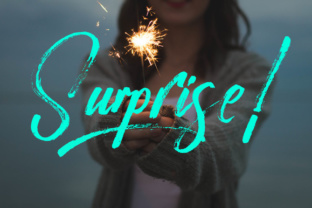
Merch designers and small online shops often look for fonts that translate well to T-shirts, mugs, and tote bags. Surprise’s dry brush texture holds up in screen printing, especially when the design is straightforward. For social media, use the font in Stories or static posts: try a single word or phrase in Surprise over a photo. The contrast between a realistic photo and the painted text creates an engaging visual tension. Avoid using it for long paragraphs; it is best for short, punchy statements.
Adapting Surprise for Different Audiences and Contexts
Your choice of how to use Surprise should reflect your audience’s expectations. For a young, creative audience on social media, a raw brush font signals authenticity and a break from corporate style. For a more traditional or luxury brand, you might use Surprise sparingly—perhaps only in a logo or as an accent in a label—to suggest artisanal care without overwhelming the viewer.
When designing for a professional portfolio or a client presentation, ensure the font’s texture does not clash with other design elements. Use Surprise as a headline type, then switch to a neutral font for body copy. The key is contrast: the brush text provides the emotional punch, while the supporting type keeps it grounded. If your project requires multiple languages, note that Surprise covers standard Latin characters, but you may need to test special accents manually.
Keeping Results Clear, Effective, and Consistent
While Surprise is forgiving by nature, a few guidelines help maintain quality:
- Spacing matters. The dry brush effect can make letters look disconnected; adjust tracking if your word feels too loose.
- Limit the color palette. One or two colors work best to avoid distracting from the brush texture. High contrast is your friend.
- Background is everything. A busy background can drown out the brush strokes. Use solid surfaces or subtle textures to let the font breathe.
- Pair with restraint. If you use Surprise for headlines, keep the rest of the design minimal. The font itself is already a strong visual element.
- Test size. At very small sizes (under 14pt), the brush details might become muddled. Use it at medium to large sizes for maximum effect.
For designers working in teams, create a style guide that specifies where Surprise is used and what supporting fonts accompany it. This keeps the brand visually consistent across print and digital channels. If you are a freelancer, present Surprise as an option when clients want a handcrafted look without the cost of custom hand-lettering. It offers the same visual charm in a fraction of the time.
Practical Inspiration for Real Projects
Sometimes the best way to understand a font is to imagine it in action. Here are three realistic scenarios:
- A coffee brand redesign. A local roastery switches from a generic serif to Surprise for its bag label. The word “COFFEE” in dry brush strokes sits above a clean sans-serif description. Customers perceive increased artisan quality without a change in product.
- An Instagram series. A wellness blogger uses Surprise for weekly affirmation posts: “breathe,” “grow,” “rest.” The texture of the font combined with a photograph of a hand holding a leaf drives high engagement because the visuals feel cohesive and personal.
- A workshop flyer. A freelance calligrapher creates a “Creative Lettering” workshop poster using Surprise for the main title, paired with a handwritten script for details. The combination attracts hobbyists who want that same imperfect charm in their own work.
In each case, the font serves the message, not the other way around. Surprise gives you a tool to say something in a voice that feels human, direct, and unpolished in the best sense. It does not shout for attention; it invites the viewer to look closer, to notice the brush marks, the gaps, the authenticity.
Whether you are designing a logo for an organic food line, creating a series of greeting cards, or refreshing your blog headers, Surprise offers a way to infuse your work with warmth and motion. It is a versatile asset for any creative professional who understands that today’s audiences crave realness over perfection—and that a font with a little grit can often speak louder than one that is flawlessly smooth.