Kimberlay: A Handwritten Font Built for Versatility and Lasting Use
Handwritten fonts occupy a distinctive space in typography. They can bring warmth, personality, and a human touch to digital and print media, but they also carry risks: poor legibility, inconsistent spacing, or a style that wears thin after a few uses. Kimberlay enters this space with a clear proposition: a handwritten typeface that balances elegance with readability and offers enough variety to remain useful across many projects. This article examines Kimberlay in practical terms—what it offers, where it performs well, and who stands to benefit most from adding it to their font library.
What Kimberlay Is and Why It Deserves Attention
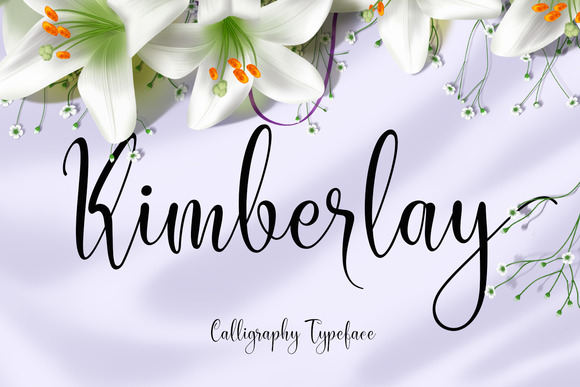
Kimberlay is a handwritten font designed with a focus on refinement and utility. Its strokes are fine and smooth, giving each character a polished, almost calligraphic feel without venturing into overly ornate territory. The letterforms are clean enough to remain legible at moderate sizes, yet they carry enough personality to elevate a design beyond standard serif or sans-serif options.
What sets Kimberlay apart from many handwritten fonts is the inclusion of a substantial set of extra characters. These alternates, ligatures, and stylistic variants allow the same typeface to produce different visual outcomes across projects. For designers and content creators who work with text-heavy layouts, this flexibility means Kimberlay can be used repeatedly without producing a tired or repetitive look.
The font strikes a balance between being decorative and functional. It does not sacrifice readability for style, nor does it play it so safe that it becomes forgettable. For anyone evaluating handwritten fonts for ongoing use, Kimberlay presents a practical option worth considering.
Legibility at Usable Sizes
One of the first concerns with any handwritten font is whether it can be read comfortably. Kimberlay performs well here. Its open counters, consistent x-height, and clear differentiation between similar characters (like b and d, or n and u) mean it works for body text in small to medium sizes, not just for headlines. This makes it more versatile than many script or handwritten alternatives that require large display sizes to be readable.
Elegant Yet Unobtrusive Design
The fine, smooth lines give Kimberlay a classy appearance, but the font does not demand attention. It integrates well into layouts where the text itself—rather than the typeface—should be the focus. This quality is especially valuable for branding materials, invitations, packaging, and editorial content where the tone should feel refined but not overstated.
Extensive Character Set for Creative Flexibility
The extra characters in Kimberlay are not mere additions; they are functional alternates that change the rhythm and appearance of the text. Swash variants, contextual alternates, and ligatures allow designers to create unique typographic compositions without switching fonts. For someone managing a brand or creating a series of related materials, this means Kimberlay can deliver a fresh look each time it is used, reducing the need for multiple typeface licenses.
Consistency Across Characters
Hand-drawn fonts sometimes suffer from uneven stroke weights or inconsistent slant, which can distract readers. Kimberlay maintains a disciplined uniformity. The line weights are balanced, the slant is consistent, and the spacing between letters feels natural without being erratic. This reliability makes it easier to pair with other fonts and to use in layouts that require precision, such as logos or multi-page documents.
Real-World Performance and Use Cases
In practical terms, Kimberlay holds up well across both digital and print environments. On screen, the fine lines render clearly at standard sizes, provided the display has reasonable resolution. For print, the font reproduces with the smoothness expected from well-hinted typefaces, making it suitable for business cards, stationery, menus, and signage.
Branding and Logo Design
Kimberlay works particularly well for brands that want a human, approachable feel without losing professionalism. A boutique consultancy, a lifestyle blog, or a small-batch product line could use Kimberlay as a primary brand typeface. The extra characters allow each brand touchpoint—website headers, social media graphics, product labels—to vary slightly while remaining cohesive.
Social Media and Digital Content
For marketers and content creators who produce frequent visual posts, the variety within Kimberlay is a practical advantage. Instead of designing every graphic with the same exact letterforms, the alternates enable subtle differentiation. This keeps the feed or campaign looking fresh without requiring a complete redesign.
Invitations, Stationery, and Personal Projects
The elegant tone of Kimberlay makes it a natural fit for wedding invitations, greeting cards, thank-you notes, and other personal correspondence. Because it remains readable even when scaled down, it works for both the headline and the fine print on the same piece, reducing the need to mix multiple fonts.
Educational and Instructional Content
For educators and instructional designers, a readable handwritten font can make worksheets, handouts, or online course materials feel more personal. Kimberlay is clear enough for short passages of instructional text, and its friendly appearance can help reduce the formal distance in educational content.
Who Benefits Most from Kimberlay
Kimberlay is not a niche font that suits only one type of project. Its practical strengths make it valuable for a range of professionals and creators:
- Freelance designers and agencies who need a reliable handwritten option for client work across industries.
- Small business owners managing their own branding or marketing materials, who want a professional look without hiring a dedicated designer.
- Bloggers and publishers creating visually consistent digital content that needs to stand out in crowded feeds.
- Event planners and wedding coordinators producing stationery and signage that should feel both elegant and readable.
- Educators and course creators looking for a friendly yet legible typeface for handouts, slide decks, or online materials.
For those who work with text-heavy designs such as newsletters, brochures, or catalogs, Kimberlay works best when used selectively—for headings, pull quotes, or short sections—paired with a neutral sans-serif for extended body text. This combination preserves readability while adding warmth exactly where it matters most.
Considerations and Potential Limitations
No typeface is perfect for every situation, and Kimberlay has boundaries worth noting. Its fine strokes, while elegant, may not stand out well at very small sizes on low-resolution screens. For applications like mobile app text or very small print, a bolder weight or another font may be more appropriate. Since Kimberlay appears to be a single-weight offering, designers working on projects that demand multiple weights (light, regular, bold) for hierarchy may need to supplement it with another family.
Additionally, while the extra characters offer variety, they require familiarity with OpenType features in design software. Users working in basic tools that do not fully support OpenType alternates will not be able to access the full range of characters. For those who use professional design software (Adobe Creative Cloud, Affinity, or similar), this is a minor consideration, but it is worth verifying before committing to a project.
The elegant, polished style may also feel out of place in highly casual or industrial design contexts. For gritty, raw, or deliberately unpolished aesthetics, a rougher handwritten font could be a better fit. Kimberlay is refined, and that refinement is a strength, but it does limit the typeface to projects where that tone aligns with the message.
Long-Term Value and Practical Recommendations
Kimberlay offers strong long-term value for anyone who regularly creates visual content and values consistency with variety. The combination of legibility, elegance, and character flexibility means it can serve as a go-to handwritten option for years without feeling stale. For a designer with a diverse client base, having a single typeface that works across projects as varied as wedding invitations, social media graphics, and product labels is genuinely useful.
For those considering Kimberlay, a practical approach is to test it in the actual environments where it will be used. Render sample text at the sizes and on the devices (or paper stocks) that matter most. Check how the extra characters behave in your design software. Pair it with a reliable sans-serif such as Montserrat, Open Sans, or Lato to see how the combination holds up over a multi-page layout. If the elegance, readability, and flexibility align with your workflow, Kimberlay can become a dependable tool rather than just another decorative font.
Ultimately, Kimberlay succeeds where many handwritten fonts fall short: it is beautiful without sacrificing function, flexible without becoming chaotic, and refined without feeling cold. For professionals, creators, and business owners who need a handwritten typeface that works hard across many uses, Kimberlay is a choice worth making.