Bluebonnet and the Renaissance of Decorative Script Fonts in Modern Branding
Typography is not merely a vehicle for words—it is a voice, a mood, and often the first impression a brand makes. In an era where digital saturation demands ever more distinct visual identities, the choice of typeface has become a strategic decision rather than a stylistic afterthought. Among the fonts gaining traction with designers, entrepreneurs, and marketers is Bluebonnet, a charming decorative script font that brings a sense of handcrafted elegance to both print and digital applications. But why is a script font with flourishes and ligatures capturing attention right now? The answer lies not in nostalgia alone, but in a broader shift toward authenticity, personalization, and emotional resonance in design.
What Is Bluebonnet? A Decorative Script Font with Purpose
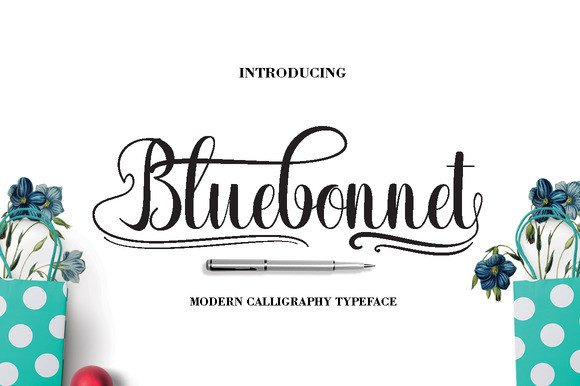
At its core, Bluebonnet is a decorative script font distinguished by its flowing letterforms, ornate flourishes, and carefully crafted ligatures. Unlike standard script fonts that prioritize legibility above all else, Bluebonnet leans into the expressive potential of typography. Each character carries a sense of motion, as if penned by hand with a deliberate flourish. The ligatures—special character combinations that replace standard pairs with more graceful alternatives—allow the text to read as a continuous, rhythmic line rather than a series of disconnected letters. This makes Bluebonnet particularly well suited for applications where the visual impact of the text matters as much as the message itself.
Designers often describe Bluebonnet as a font that feels both classic and contemporary. Its roots are clearly in traditional calligraphy and ornamental lettering, yet its execution is clean enough to work in modern layouts. This duality is part of what makes it relevant in 2024 and beyond. In a marketplace where so much content feels templated and impersonal, a font like Bluebonnet offers a shortcut to something that feels human and intentional.
Why Bluebonnet Is Gaining Attention: The Shift Toward Emotional Branding
To understand why Bluebonnet is resonating with professionals and creators, it helps to look at the broader context of branding and consumer expectations. For much of the past decade, minimalism dominated design. Clean sans-serif fonts, generous white space, and restrained color palettes became the default for startups, agencies, and even legacy brands. While this approach brought clarity and consistency, it also led to a certain visual homogeneity. One minimalist brand began to look very much like another.
As consumers grew fatigued by sameness, a counter-movement emerged. Brands started seeking ways to differentiate through personality. This is where decorative script fonts like Bluebonnet enter the picture. They offer a way to break the monotony without sacrificing professionalism. A well-chosen script font signals warmth, creativity, and attention to detail—qualities that resonate especially strongly in industries where trust and emotional connection are paramount, such as weddings, luxury goods, hospitality, and creative services.
Moreover, the rise of personalization as a consumer expectation has made unique typography more valuable than ever. When a brand uses a distinctive script font across its touchpoints—invitations, social media graphics, packaging, website headers—it creates a cohesive visual language that feels bespoke. Bluebonnet, with its flourishes and ligatures, lends itself naturally to this kind of signature look. It is not a font that fades into the background. It demands to be noticed, and for brands that want to stand out, that is precisely the point.
How Bluebonnet Fits Into Broader Trends in Design and Business
The renewed interest in decorative script fonts is not happening in isolation. Several converging trends across technology, lifestyle, and creative industries are creating conditions favorable to fonts like Bluebonnet.
The Revival of Handcrafted Aesthetics in a Digital World
As digital tools make it easier than ever to produce polished, uniform content, there is a growing counter-desire for imperfection and humanity. Consumers are drawn to things that look made, not manufactured. This trend is visible across many domains: the popularity of hand-lettered signage in cafes, the use of textured paper in premium packaging, and the resurgence of calligraphy in wedding stationery. Bluebonnet fits directly into this movement. Its hand-drawn feel and decorative flourishes evoke the work of a skilled lettering artist, even when used in a fully digital workflow. For freelancers and small business owners who may not have the budget for custom hand-lettering, a font like Bluebonnet provides a cost-effective way to achieve a similar effect.
Special Event Design as a Growth Market
Weddings, galas, product launches, and milestone celebrations are once again being treated as opportunities for immersive brand experiences. The demand for elevated event design has grown steadily, and typography plays a central role. Invitations, place cards, signage, and digital announcements all rely on fonts that can convey the tone of the event. Bluebonnet is particularly well suited for this space because its flourishes and ligatures add a level of ceremony and formality that standard fonts cannot match. Event planners and couples alike are turning to it to create a cohesive, romantic aesthetic that feels both timeless and current.
Content Differentiation for Creators and Marketers
Social media platforms are more crowded than ever, and creators are constantly looking for ways to stop the scroll. Typography can be a powerful differentiator. A quote set in Bluebonnet has a visual presence that draws the eye, even in a busy feed. Marketers are now recognizing that font choice affects engagement metrics—not just readability, but the emotional tone that the font communicates. Bluebonnet, with its elegant curves and flourishes, can make a simple message feel like an invitation or a celebration. This is particularly valuable for lifestyle brands, wedding vendors, and luxury service providers who need to convey a sense of occasion in every post.
Practical Applications: Where Bluebonnet Shines
Understanding the theory is one thing, but seeing how Bluebonnet performs in real-world contexts is where its value becomes concrete. Based on observations from designers and brand strategists, several use cases stand out.
Wedding and Event Stationery
This is perhaps the most natural application for Bluebonnet. Wedding invitations, save-the-dates, and ceremony programs benefit from a font that feels romantic and celebratory. The ligatures in Bluebonnet allow names and dates to flow together in a way that looks intentional and polished. Many stationery designers report using it for the couple's names or the main header, paired with a clean sans-serif for body text. This combination balances elegance with readability.
Luxury Branding and Packaging
For boutique brands in fashion, skincare, or gourmet food, packaging is often the first physical touchpoint with a customer. Bluebonnet can be used on labels, boxes, or tissue paper to convey a sense of craftsmanship. A skincare brand, for instance, might use Bluebonnet for the product name on a minimalist white jar, allowing the typography to carry the aesthetic weight. The flourishes add a subtle decorative element that signals premium quality without being ostentatious.
Digital Content for Creatives
Photographers, calligraphers, and wedding planners often use social media to showcase their portfolios. Bluebonnet works well for watermarking images, creating quote graphics, or designing announcement posts. Its script style complements visual content without competing with it. Because the font includes multiple ligature variations, designers can avoid the repetitive look that sometimes plagues standard script fonts.
Small Business Signage and Collateral
Coffee shops, boutiques, and creative studios frequently use hand-lettered signs to give their spaces character. Bluebonnet can be used in digital mockups, printed menus, or window decals to achieve a similar handmade look. It is particularly effective for short phrases or single words, where the flourishes can be fully appreciated.
Adapting to Changing Preferences: Why Professionals Are Rethinking Typography
The growing interest in fonts like Bluebonnet is also a response to changing audience expectations. Today's consumers are more visually literate than any previous generation. They can spot a generic template from a mile away, and they reward brands that invest in distinctive design. For professionals and entrepreneurs, this means that every element of visual communication matters more than ever. Typography is no longer a background concern—it is a brand asset.
At the same time, the tools available to non-designers have become more powerful. With platforms like Canva, Adobe Express, and Figma, even freelancers with limited design training can produce polished materials. Access to high-quality fonts like Bluebonnet democratizes professional-level design. This has changed the workflow for many small business owners, who can now create cohesive brand identities without hiring a full-service agency. The key is choosing fonts that do the heavy lifting visually, and Bluebonnet's built-in flourishes and ligatures make it especially effective for this purpose.
Another factor is the growing emphasis on emotional connection in marketing. Data-driven tactics remain important, but brands are rediscovering the power of storytelling and atmosphere. A font that feels personal can help bridge the gap between a business and its audience. Bluebonnet, with its handcrafted character, suggests that there is a human being behind the brand—someone who cares about details. In an age of automation and AI-generated content, that human touch is increasingly rare and increasingly valued.
Observations From the Field: How Creators Are Using Bluebonnet
In conversations with wedding stationery designers and brand consultants, a consistent theme emerges: Bluebonnet is valued for its versatility as much as its beauty. Unlike some decorative scripts that only work at large sizes or in specific contexts, Bluebonnet maintains its character across a range of applications. Its ligatures prevent awkward letter combinations, and the flourishes are designed in a way that does not overwhelm the text. This makes it a reliable choice for professionals who need a font that performs well in both print and digital formats.
One observation worth noting is that Bluebonnet is often used as an accent font rather than a body font. This is a smart approach. Using it for headers, names, or short phrases maximizes its visual impact while preserving readability. Pairing it with a neutral sans-serif or a subtle serif creates a contrast that guides the reader's eye. This kind of strategic pairing is something that experienced designers do instinctively, and it is one reason why Bluebonnet has found favor among professionals who understand typography's role in hierarchy and flow.
Bluebonnet in the Larger Context of Font Licensing and Creative Workflows
Finally, it is worth recognizing that the popularity of fonts like Bluebonnet reflects broader changes in how creative assets are sourced and used. The subscription model for font libraries has made it easier for designers to access high-quality typefaces without large upfront costs. This has lowered the barrier to entry for independent creators and small teams. At the same time, the demand for unique, less common fonts has increased, as brands seek to avoid the look of widely used default options. Bluebonnet occupies a sweet spot: it is distinctive enough to feel special, but accessible enough to be practical for real projects.
The conversation around typography is also becoming more nuanced. Designers are increasingly considering the cultural and emotional connotations of typefaces. A font like Bluebonnet carries associations with celebration, elegance, and tradition. When used intentionally, it can reinforce a brand's positioning in a subtle but powerful way. This kind of strategic thinking is what separates effective branding from mere decoration.
Conclusion: Bluebonnet as a Thoughtful Choice for Modern Design
Bluebonnet is more than just a pretty font. It is a response to a cultural moment that values authenticity, emotional resonance, and distinction. Whether you are a wedding stationery designer looking for the perfect script for a couple's names, a brand strategist building a visual identity for a luxury client, or a small business owner creating your own marketing materials, Bluebonnet offers a combination of beauty and functionality that is hard to find in standard typefaces. Its flourishes and ligatures are not gimmicks—they are tools for creating text that feels intentional and alive.
As the design landscape continues to evolve, the fonts that endure will be those that help brands tell their stories more effectively. Bluebonnet, with its handcrafted elegance and practical versatility, is well positioned to do exactly that. For professionals and creators who understand that typography is an investment in perception, Bluebonnet is a choice worth making.